Code Status
Play like it matters.
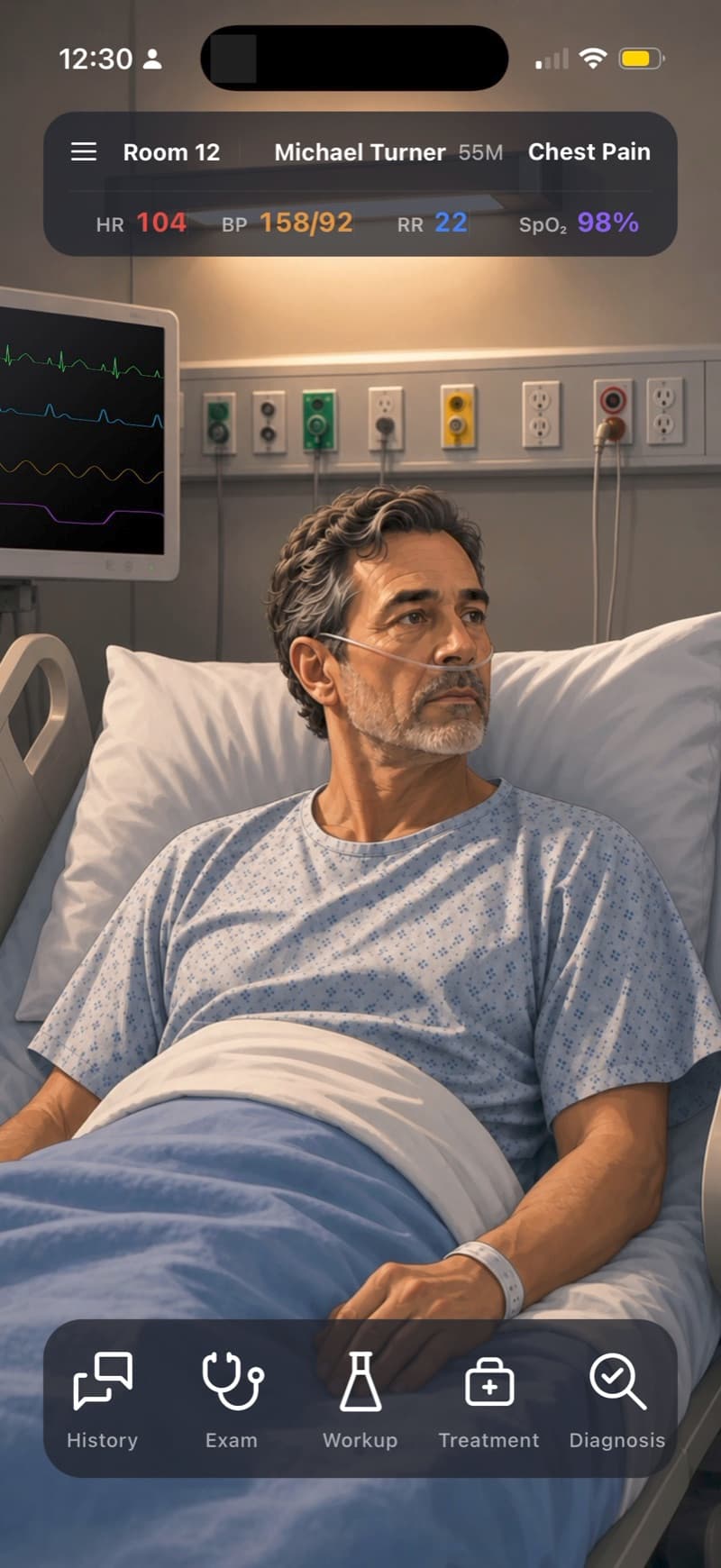
Emergency
medicine,
simulated.
The patient is yours. Make the call.

Code Status
Emergency medicine simulationEmergency medicine simulation for iPhone

Make the call. See what happens.
Six steps.
Every patient.
Serious medicine. Actually fun to play. Every case follows the same rhythm, so you can focus on the patient, your decisions and what happens next.
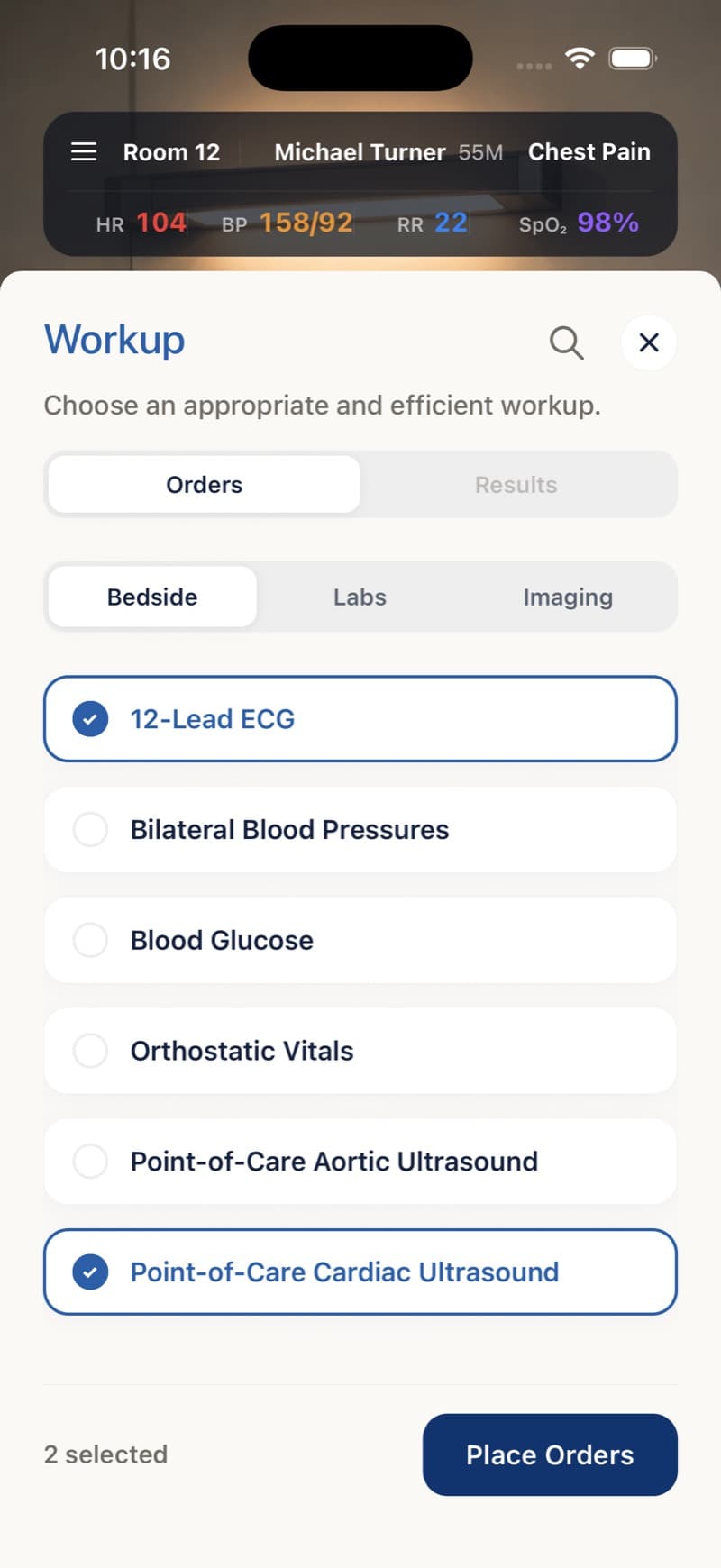
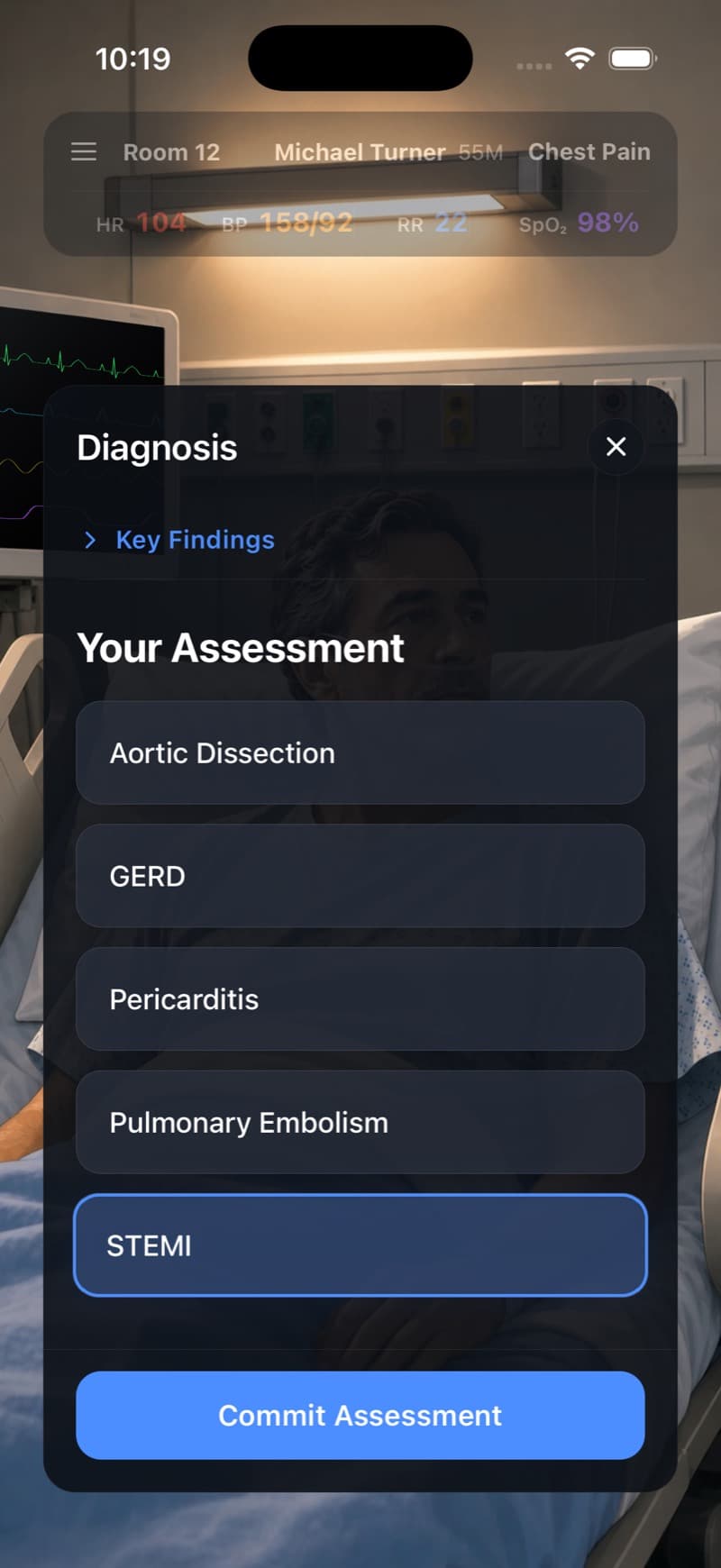
- History
- Exam
- Workup
- Treatment
- Diagnosis
- Disposition
Clinical judgment, played out.
The patient reacts to what you do.

When to stop testing, and the right disposition. Nothing arrives to rescue you from the decision.

She looks well enough to go home. She does not stay that way.
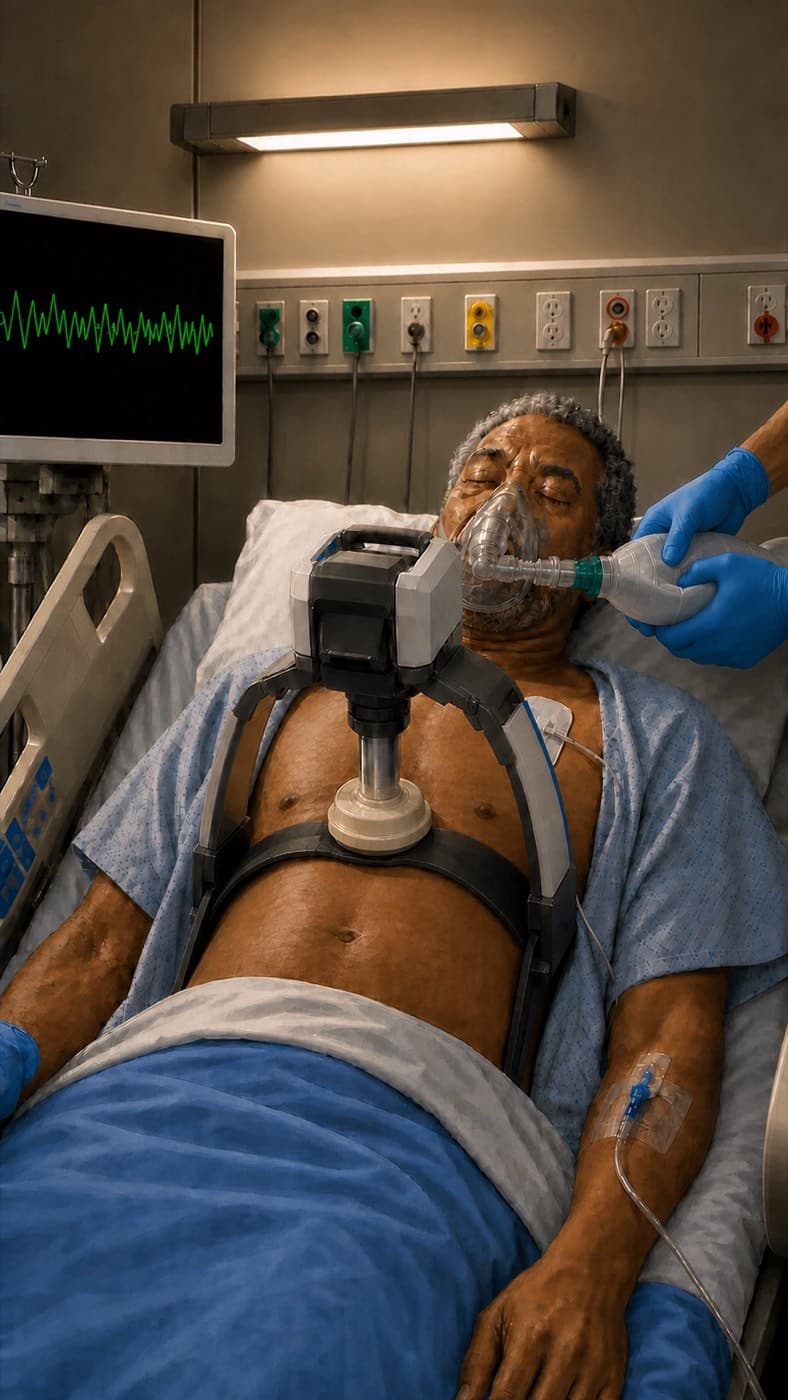
Compressions, cycles, and a cause you have to find while the clock runs.
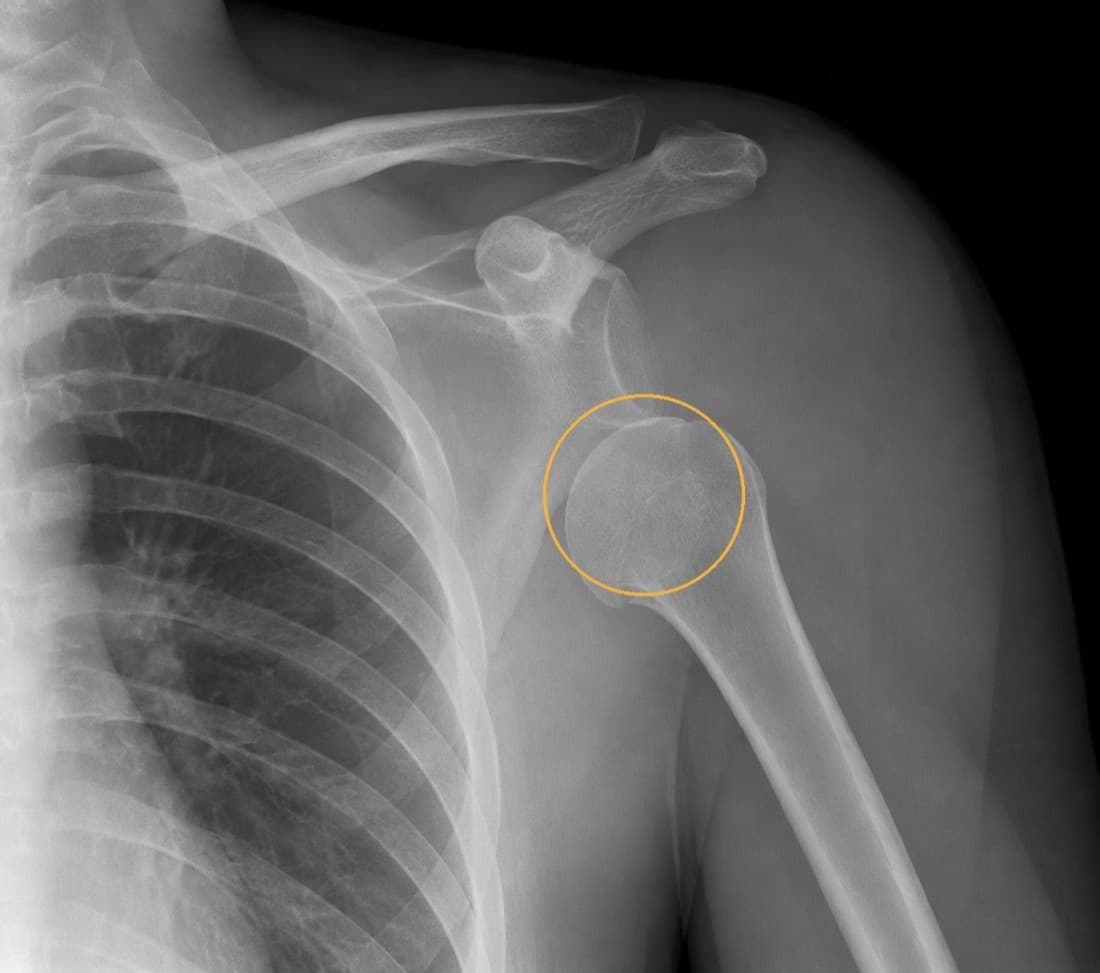
Some problems you fix with your hands.
Read the film, sedate, and reduce.Read the film, sedate, reduce, and read the film again.
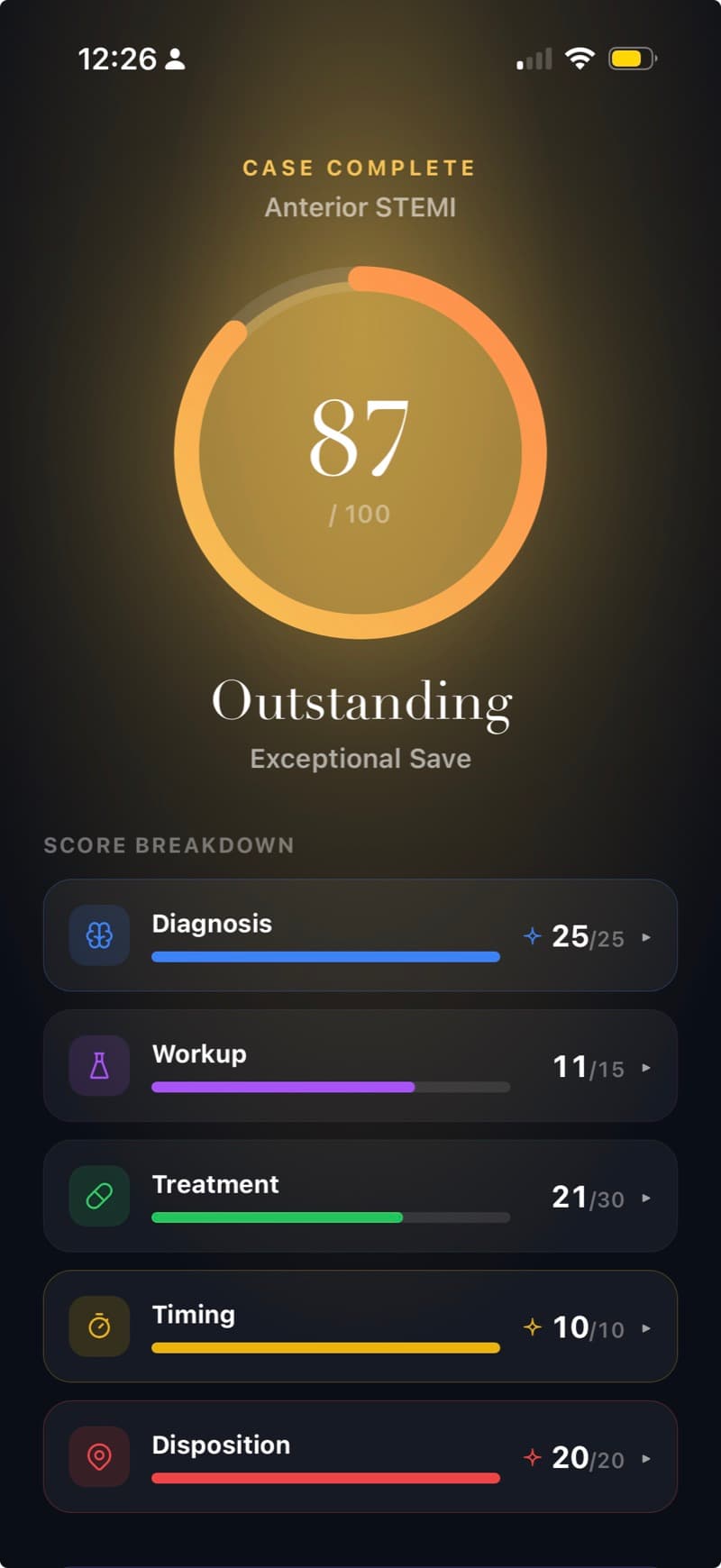
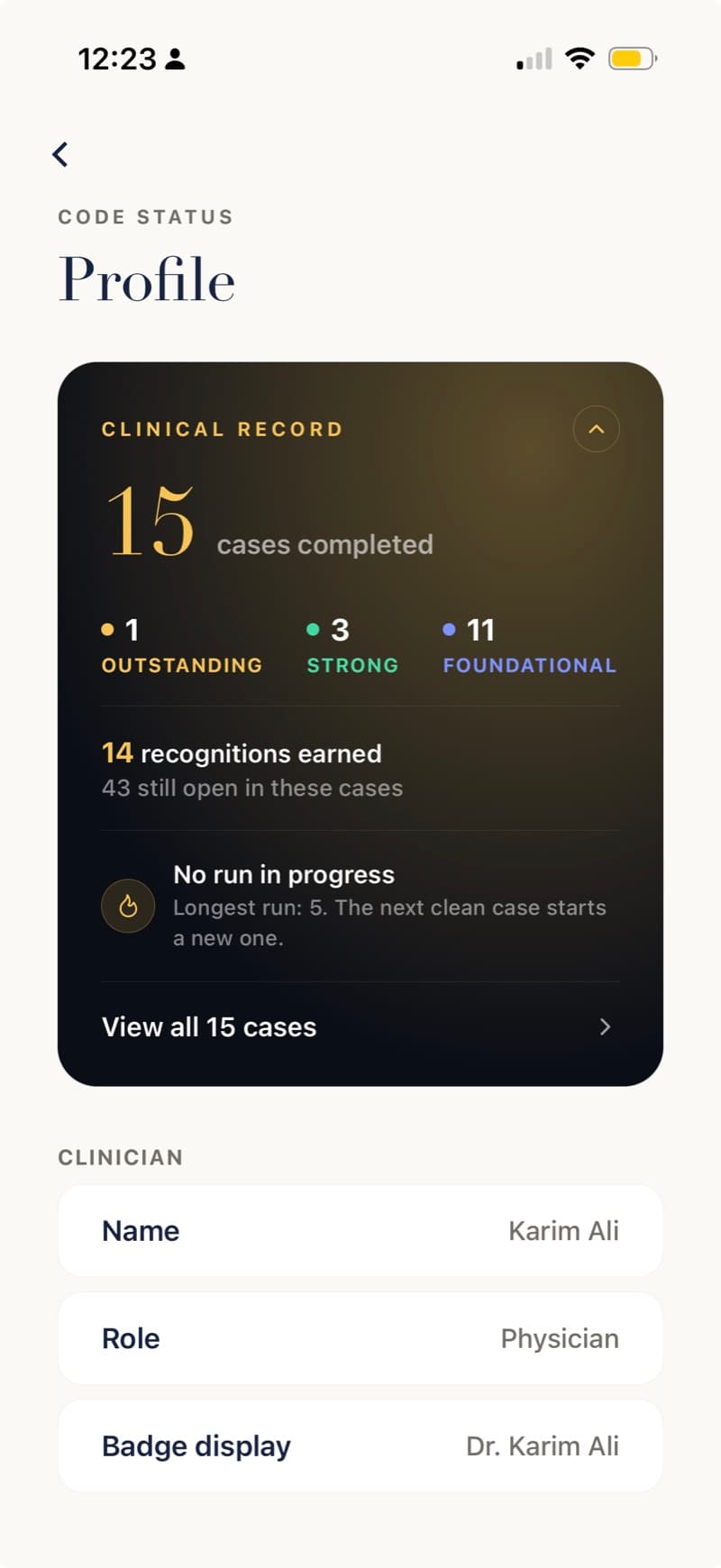
Score it. Replay it. Beat your best.
The medicine is real. The patient is not. The consequences are yours. Every decision shapes what happens next, your score and your debrief. Try a different approach and see where it leads. Only your best run counts. Your record follows you.
Attending’s Notes
Play first.
Learn deeply afterward.
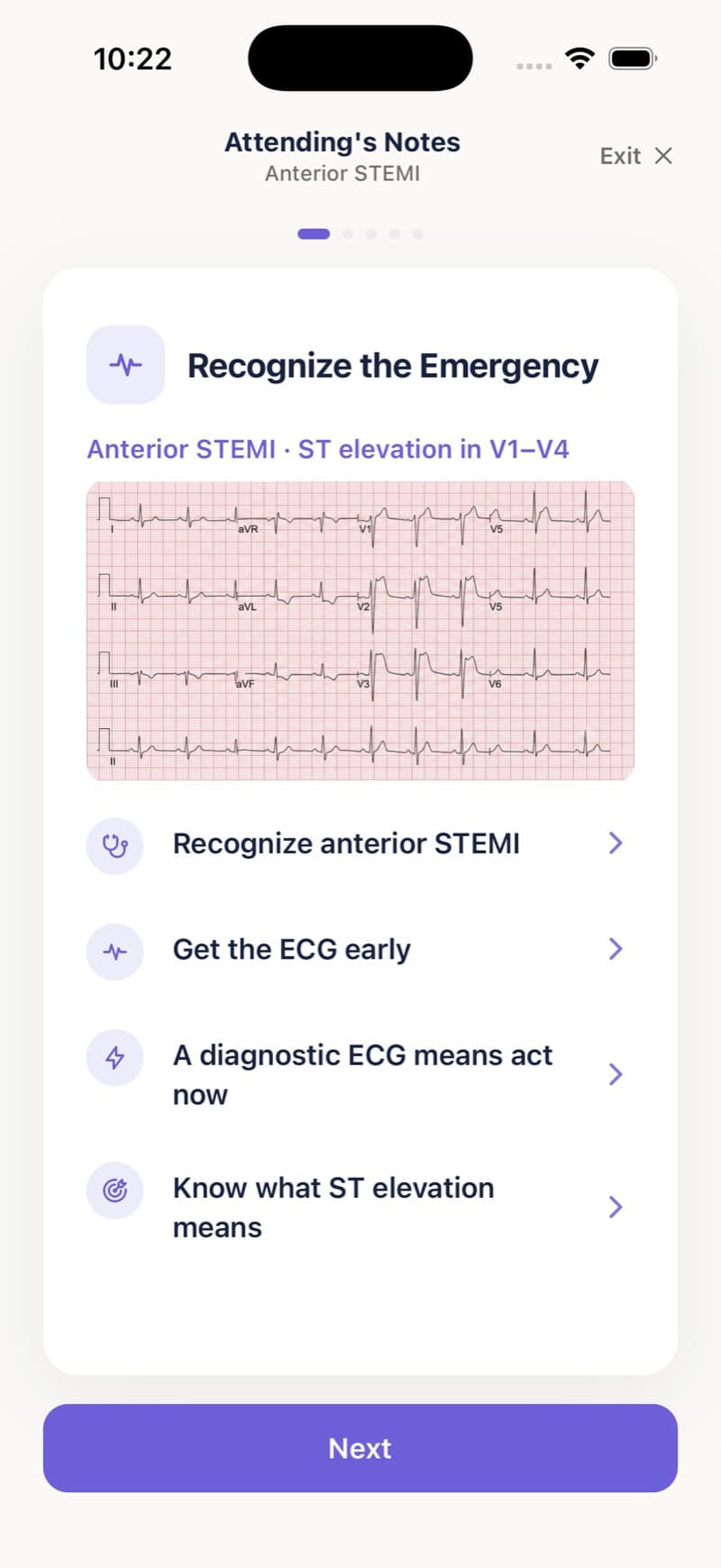
After each case, Attending’s Notes breaks down what mattered, the reasoning behind it, and what to carry forward. Then Make the Call adds fast bedside questions that lock in the lesson.
10 cited sources per case, linked to the originals.
Code Status
Can you master all 25?
Written for clinicians and medical learners. Every case is authored and every patient is fictional. Cardiology, pulmonary, neurology, abdominal, vascular, infectious disease, and procedures. New cases are added regularly.
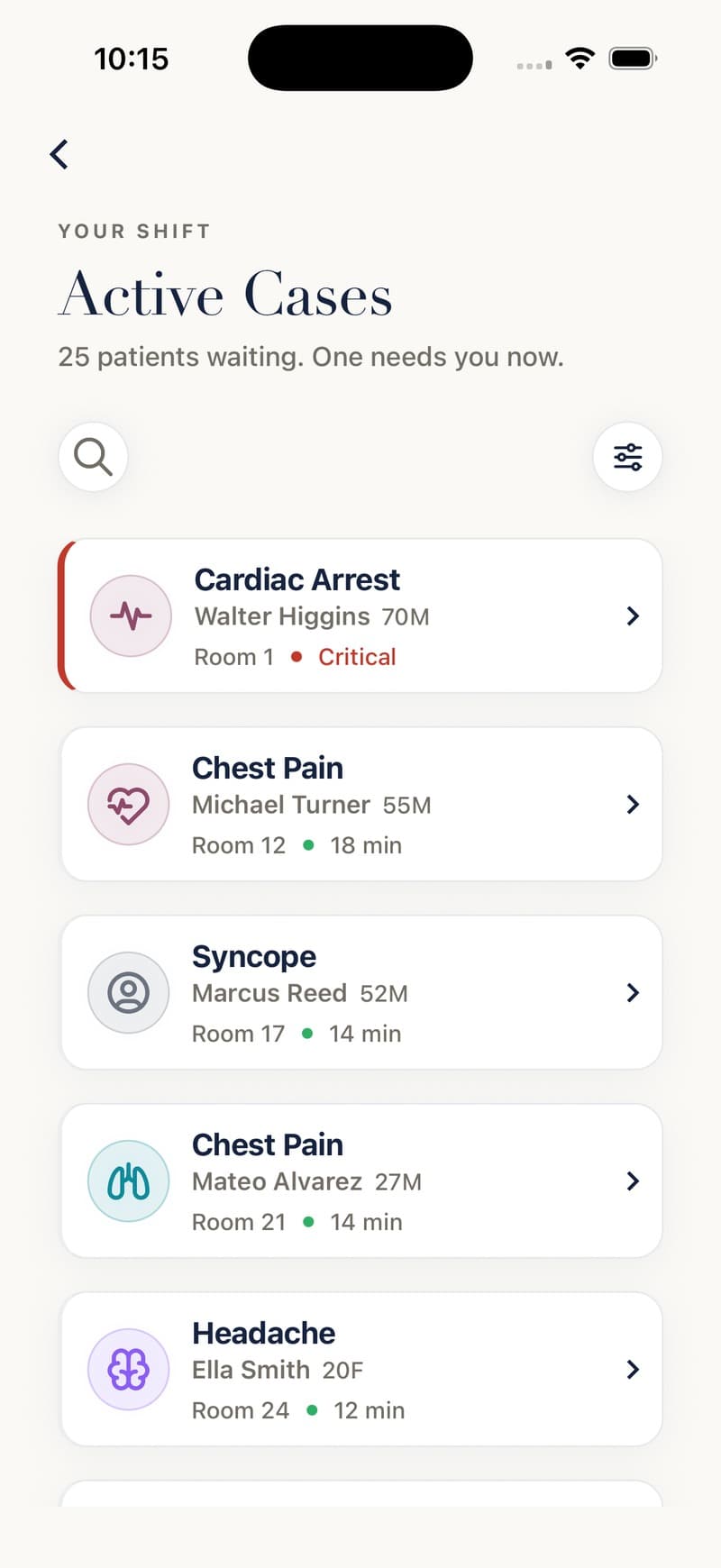
Can you master all 25?
Written for clinicians and medical learners. Every case is authored and every patient is fictional. Cardiology, pulmonary, neurology, abdominal, vascular, infectious disease, and procedures. New cases are added regularly.










Your shift. Your call.
Somewhere to come back to.
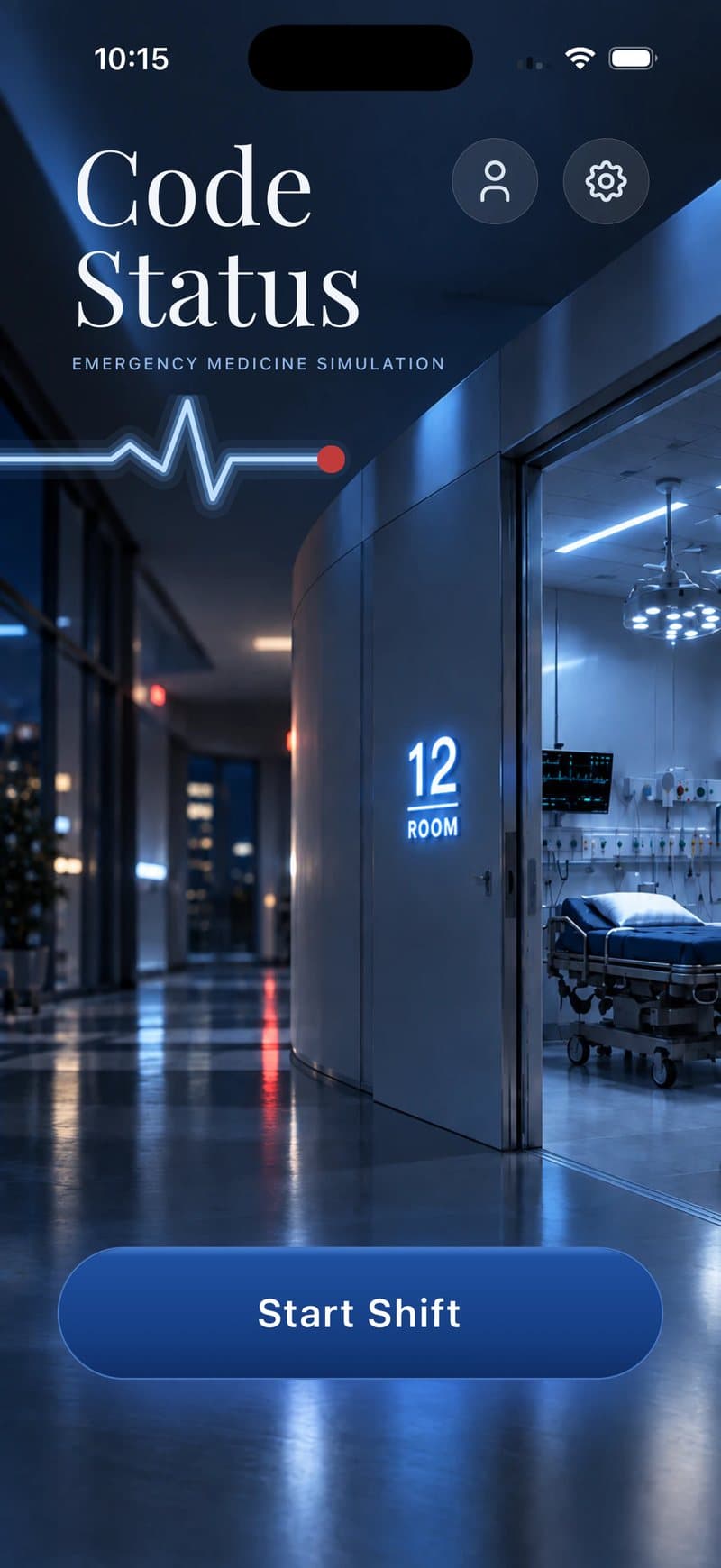
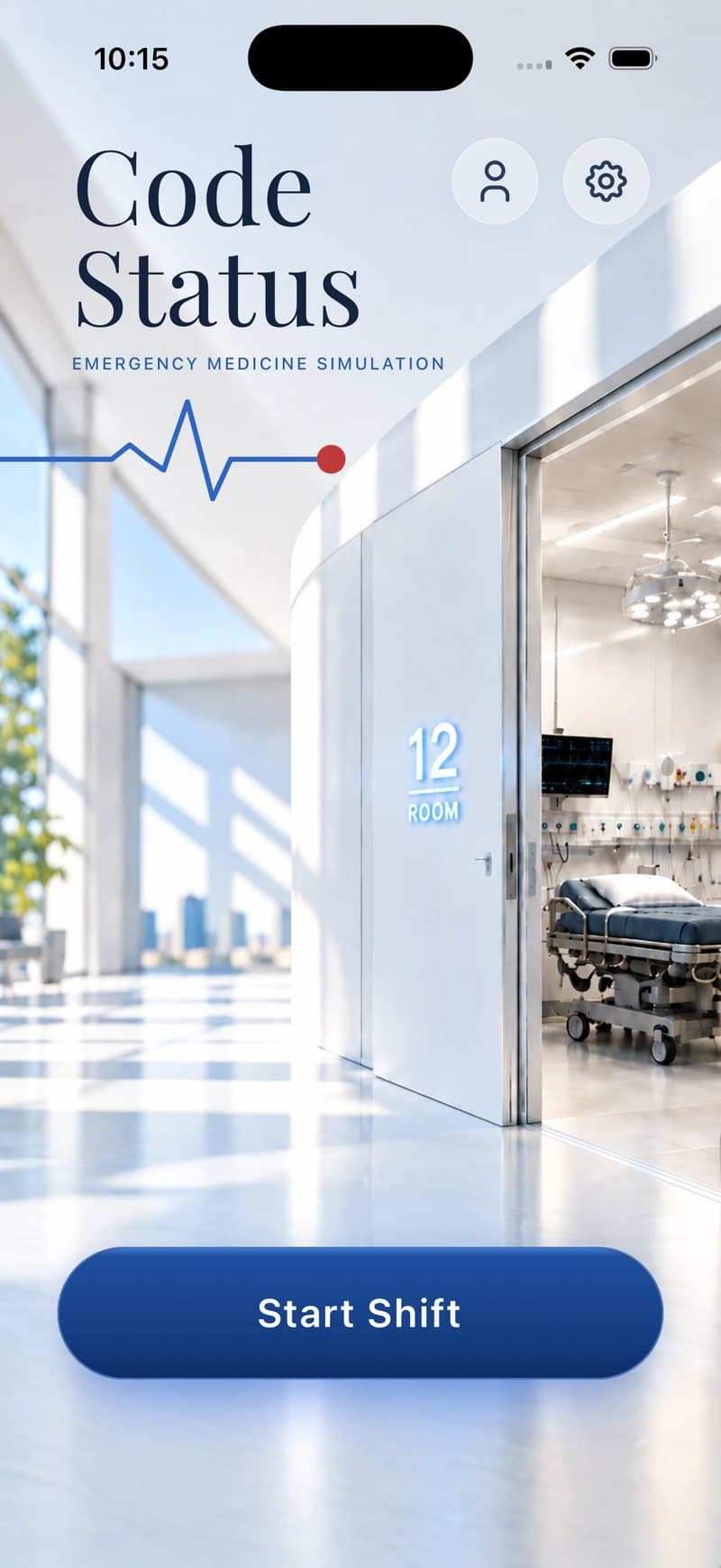
Day or night, your downloaded cases are ready offline.
Who it is for
Clinicians and medical learners.
For individuals
Medical students, residents, physicians, nurses, PAs, NPs and paramedics. Work a case at your own pace, commit to a call and review what mattered afterward. Two cases are free, every case can be replayed and your progress follows your account.
For educators
Send a learner into a case, then discuss the decisions they made. The library covers core emergency presentations and every case closes with sourced teaching you can review together. Scores are case-specific teaching feedback, not an assessment of competence.
Teaching a group? Tell us what you need.
Play two complete
cases, free.Play two complete cases,
free.
Premium unlocks the full library, the teaching deck in every case, and new cases and features as they arrive.
Requires iPhone. iOS 16.4 or later.
Buy in the app or on this site. Cancel anytime.
The patient is yours.
Make the call.
Two cases are free on iPhone. Take one and see how you score.

Stay in the loop
New cases and major Code Status updates, occasionally.
Unsubscribe anytime. Privacy Policy.
Play like it matters.