Code Status case · Beginner · Premium
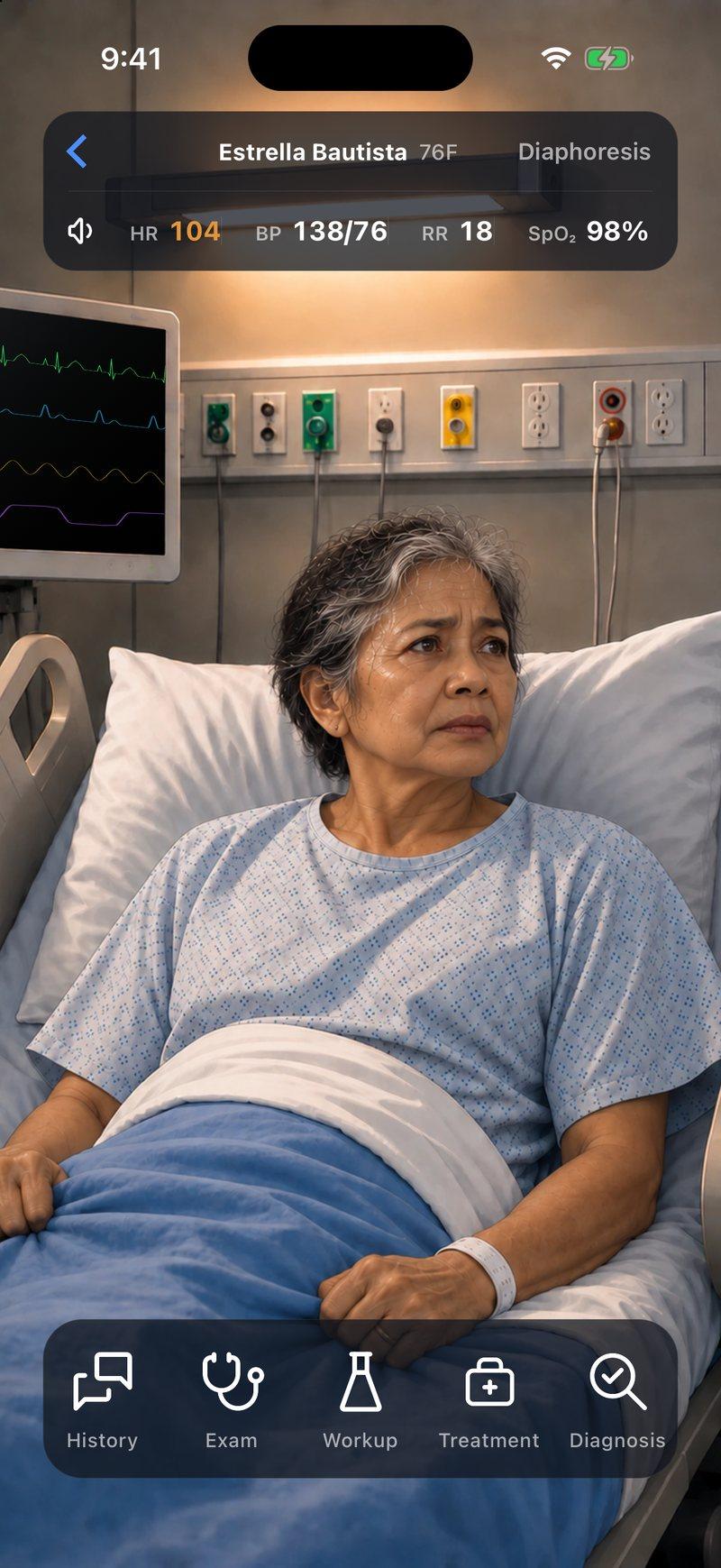
Sweating in a 76-year-old woman
“I'm feeling really shaky. I can't stop sweating.”
“She's been shaking and sweating for about two hours. Her daughter brought her in. She's alert, but a little slow to respond.”
Your challenge
Sweating and shaking at 76 can mean the heart is in trouble, an infection is spreading, the rhythm has gone fast and irregular, or something simpler. Estrella's daughter brought her in after two hours of symptoms, and she is alert but a little slow to answer. The first few minutes matter, and a simple bedside assessment could change everything. Once she improves, you still have to decide whether going home is safe.
After the case, Attending’s Notes explains the decisions that mattered, backed by 10 sources.
Ready to make the call?


Two cases are free. This one is part of Premium.
Spoiler: the diagnosis and what this case teaches
Diagnosis
Hypoglycemia
Lesson 1
Check the Sugar First
On diabetes medicines, unusual symptoms call for a glucose check.
- Check glucose if shaky, sweaty, or confused
- Below 70 mg/dL is low, below 54 mg/dL is significant
- Older adults may lack the usual warning signs
- Hypoglycemia can mimic stroke or trigger ischemia
Lesson 2
Fast Sugar, Then Food
Fast sugar lifts the number. Food keeps it there.
- Awake and swallowing: give 15 g of glucose
- Recheck in 15 minutes and repeat if still low
- Unsafe swallowing: IV dextrose or glucagon
- Once recovered, give a meal or starchy snack
Lesson 3
The Pill Can Outlast the Sugar
Glucose corrects low blood sugar. Octreotide helps keep it from returning.
- Glipizide can keep insulin flowing as glucose falls
- Hypoglycemia may return after the first correction
- Consider octreotide to help prevent recurrence
- Check new drugs, kidney disease, and intake
Lesson 4
Safe Now Is Not Safe Tonight
Treat the cause, not just the glucose reading.
- Admit when sulfonylurea hypoglycemia may recur
- Check glucose frequently for 24 to 48 hours
- Hold glipizide and reassess her regimen
- Teach warning signs and arrange follow-up
In the app, every line above opens into the detail behind it: doses, pitfalls and the evidence, with 10 sources linked to the originals.
Estrella is a fictional patient. Code Status is for training only and is not intended for real-world patient care, diagnosis, treatment, or clinical decision-making.