Code Status case · Advanced · Premium
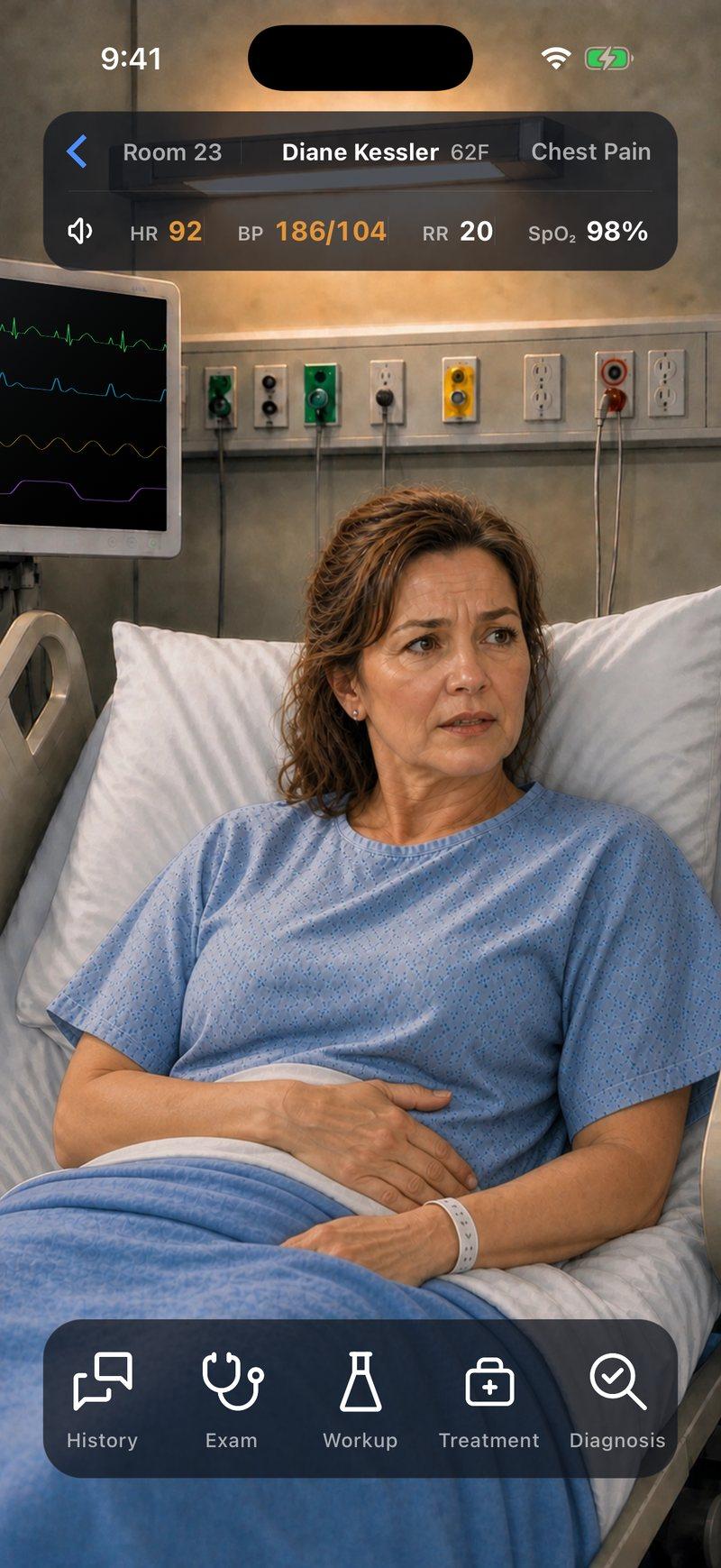
Chest pain in a 62-year-old woman
“I thought I'd strained a muscle in my back but the pain isn't going away.”
“Chest and upper back pain that came on all at once about two hours ago while she was doing the dishes. She has a history of hypertension. Pressure is 186 over 104. She drove herself in.”
Your challenge
Diane's chest and upper back pain came on all at once while she was doing the dishes. She thought she had strained a muscle, she drove herself in, and she wants to go home. Her blood pressure is very high. A heart attack, a tear in the aorta, a clot in the lungs, an inflamed pancreas and a pulled back muscle all fit parts of her story, and some of the usual chest pain treatments would be the wrong move for one of them.
After the case, Attending’s Notes explains the decisions that mattered, backed by 11 sources.
Ready to make the call?


Two cases are free. This one is part of Premium.
Spoiler: the diagnosis and what this case teaches
Diagnosis
Aortic Dissection
Lesson 1
Abrupt Chest or Back Pain Suggests Dissection
A well appearance and equal pulses do not exclude dissection.
- Severe pain from onset suggests dissection
- Abrupt pain & very high BP suggests dissection
- Equal pulses do not exclude dissection
- Normal chest X-ray does not exclude dissection
Lesson 2
CT Angiography Defines the Dissection
Ascending aortic involvement changes the surgical plan.
- CTA can confirm dissection if stable
- Check the ascending aorta and branch vessels
- Normal ECG or bedside echo can miss dissection
- D-dimer cannot rule out dissection on its own
Lesson 3
Control Heart Rate Before Blood Pressure
Slowing the heartbeat reduces aortic wall stress before further pressure lowering.
- Target HR 60–80 and SBP <120 if perfusion allows
- Start IV esmolol or labetalol for rate control
- If BP stays high after rate control, add a vasodilator
- Treat pain to reduce heart rate and aortic stress
- If beta-blockers are unsuitable, get specialist input
Lesson 4
Ascending Aorta Dissection Needs Surgery
Type B disease starts medically unless complications require intervention.
- Type A dissection needs emergency surgery
- Uncomplicated type B needs ICU rate and BP control
- Type B with rupture or organ ischemia is an emergency
- Unexpected hypotension needs urgent reassessment
In the app, every line above opens into the detail behind it: doses, pitfalls and the evidence, with 11 sources linked to the originals.
Diane is a fictional patient. Code Status is for training only and is not intended for real-world patient care, diagnosis, treatment, or clinical decision-making.