For junior doctors in the UK and Australia
Practice the first assessment before your ED rotation.
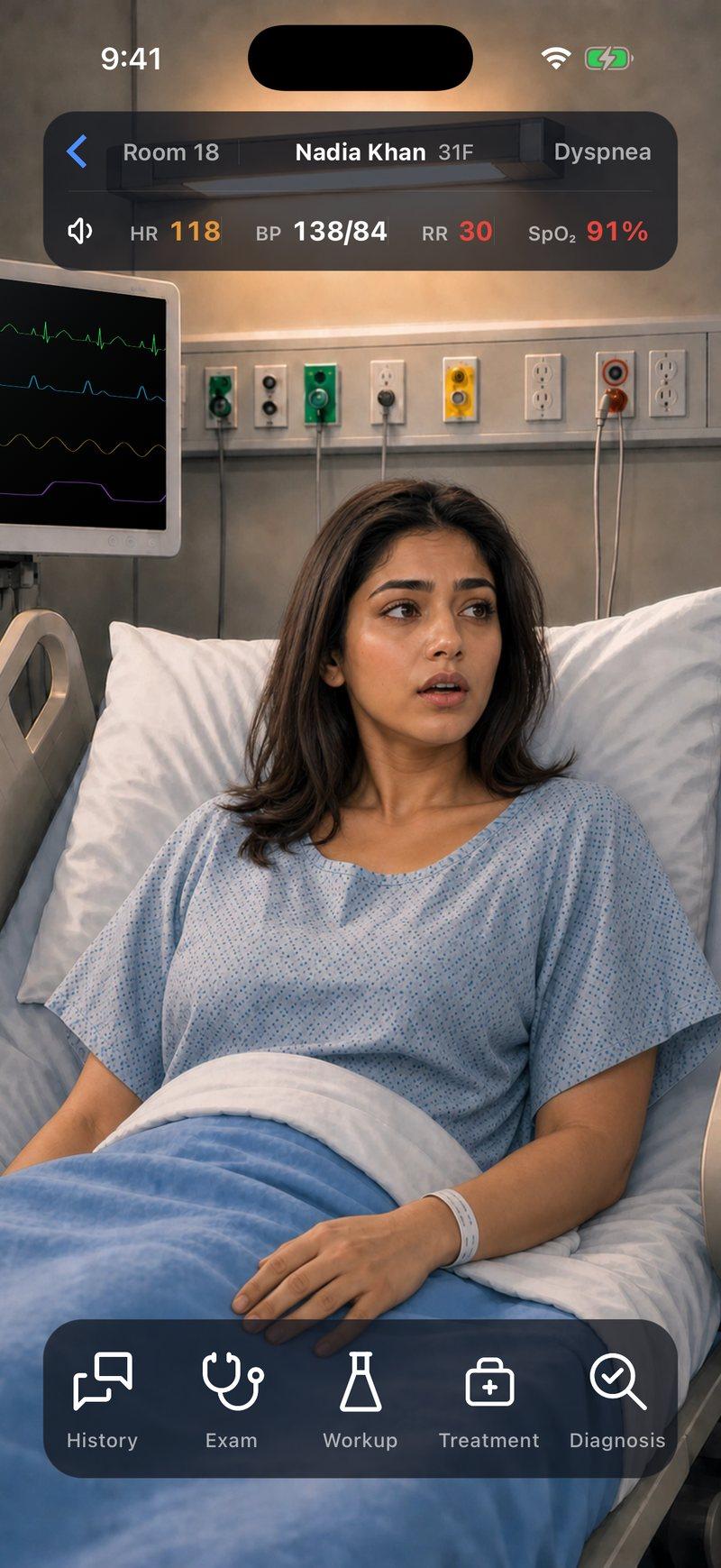
Code Status is a medical simulation game for iPhone and Android, written by a board-certified emergency physician. Each case is a full encounter on your phone: history, exam, workup, diagnosis, treatment and disposition, then a score and cited teaching.
As an FY1 or FY2 in A&E, or an intern or RMO in ED, you are often the first doctor to see the patient. You take the history, examine, order the first tests and start treatment, then present to a registrar or consultant. Here you can practice that first assessment.
The hospital is American, so you will see US terms like attending (your consultant). In Settings, switch Region to International for glucose, creatinine and drug levels in SI units, and for drug names like adrenaline and paracetamol. Hemoglobin stays in g/dL.


What you practice
Make the first assessment.
Each case starts with a complaint and a set of observations. Take the history, examine, order the workup and start treatment, then decide where the patient goes: home, admission, the ICU or the operating room.
See how your decisions score.
Each case is scored on diagnosis, workup, treatment, timing and disposition. Replay it, change one decision and see how the patient and the score respond.
Read the evidence behind each call.
After every case, Attending’s Notes explains what mattered and why, with about 10 cited sources per case, linked to the originals. US guidelines lead, and some cases also cite NICE, ESC, GINA or GOLD.
See how it teaches: free lessons from the cases.
What it is not
Code Status is not accredited teaching, it carries no portfolio or CPD credit, and it is not MRCEM or ACEM exam preparation. The hospital is American, so some pathways differ from NHS or Australian practice: at work, follow your local guidelines. The cases are adult presentations. Every patient is fictional, and it is for training only.
Cases to start with
See all 31 casesNew to emergency care? 12 of the 31 cases are Beginner: spot the pattern and give the standard care.





Supervising junior doctors?
Send a learner into a case, then talk through the decisions they made. Every case closes with sourced teaching, and scores are teaching feedback, not an assessment of competence. Tell us what you need.
Play two complete cases, free.
For iPhone (iOS 16.4 or later) and Android phones (Android 7.0 or later).