Code Status case · Intermediate · Premium
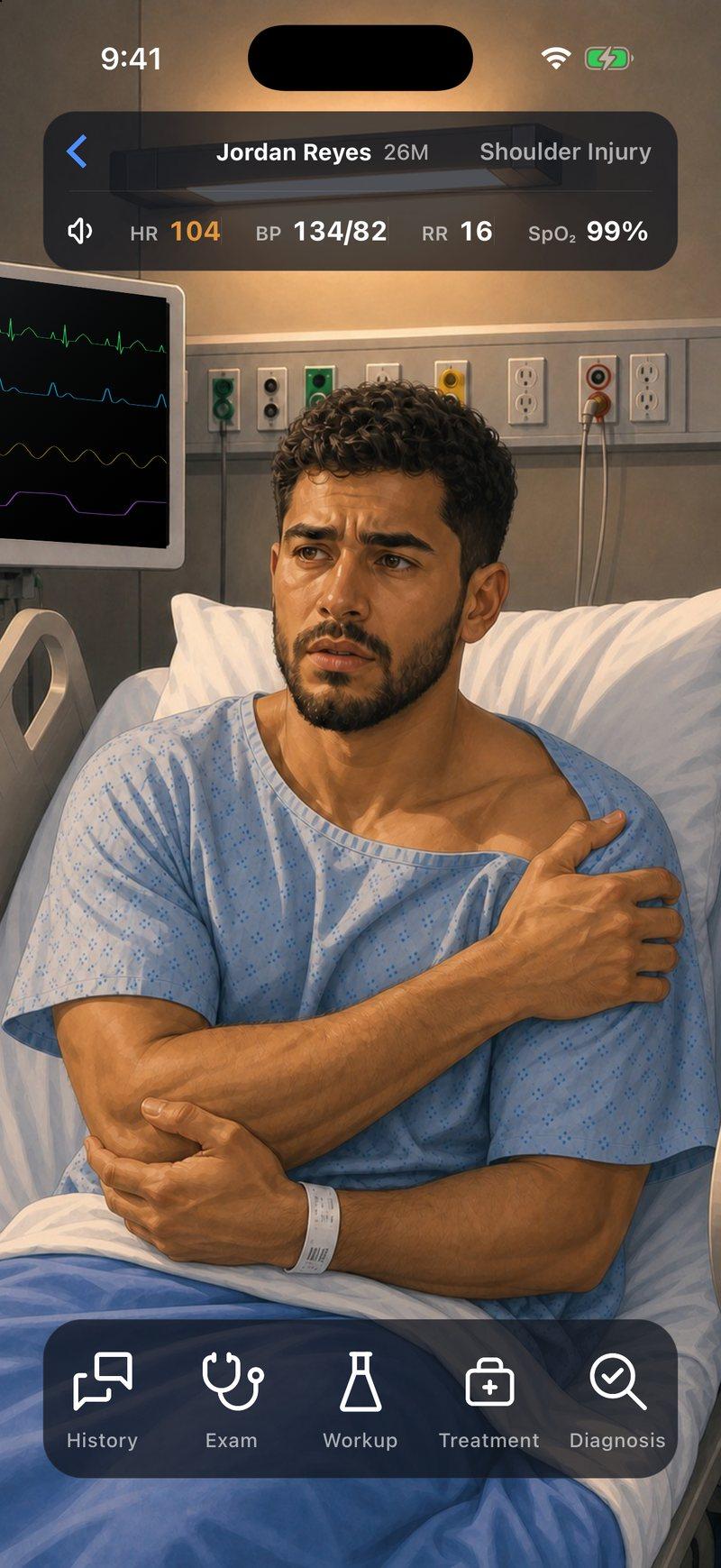
Shoulder injury in a 26-year-old man
“I can't move my arm. It hurts so much.”
“Left shoulder injury after a fall while rock climbing about 45 minutes ago. First time this has happened. He's in a lot of pain.”
Your challenge
Jordan fell while rock climbing 45 minutes ago, it is the first time he has hurt this shoulder, and he just wants it fixed. A shoulder knocked out of place to the front or the back, a broken arm bone, a torn tendon or a separated collarbone joint can all start the same way. If the fix is a procedure, it is yours to do: check the nerve before you touch him, decide how much pain relief and sedation he really needs, and know what to do if the first try fails.
After the case, Attending’s Notes explains the decisions that mattered, backed by 10 sources.
Ready to make the call?


Two cases are free. This one is part of Premium.
Spoiler: the diagnosis and what this case teaches
Diagnosis
Anterior Shoulder Dislocation
Lesson 1
Check Axillary Nerve Function Before Reduction
A documented baseline helps identify an injury caused or revealed by reduction.
- A squared shoulder can mean anterior dislocation
- Check deltoid strength, sensation, and pulses
- If fracture is suspected, image before reduction
Lesson 2
Control Pain and Relax the Shoulder
A relaxed shoulder is easier and safer to reduce. Not everyone needs deep sedation.
- Local anesthesia may avoid procedural sedation
- Joint lidocaine can relieve pain without sedation
- Match sedation to ventilation and BP
- Sedation needs monitoring and airway readiness
Lesson 3
Reduce Gently
If it will not reduce, improve relaxation before adding force.
- Rotate slowly and pause until spasm relaxes
- Scapular manipulation helps reposition the socket
- If reduction fails, do not use more force
- Stop if force rises or nerve or pulse findings worsen
Lesson 4
Confirm Reduction and Recheck Nerves and Pulses
New weakness, numbness, or unexpected pain needs reassessment before discharge.
- Confirm reduction and look for associated injury
- Once reduced, repeat the neurovascular exam
- Reassess new weakness or unexpected pain now
- Immobilize and arrange orthopedic follow-up
In the app, every line above opens into the detail behind it: doses, pitfalls and the evidence, with 10 sources linked to the originals.
More cases
All 30 casesJordan is a fictional patient. Code Status is for training only and is not intended for real-world patient care, diagnosis, treatment, or clinical decision-making.