Code Status case · Beginner · Premium
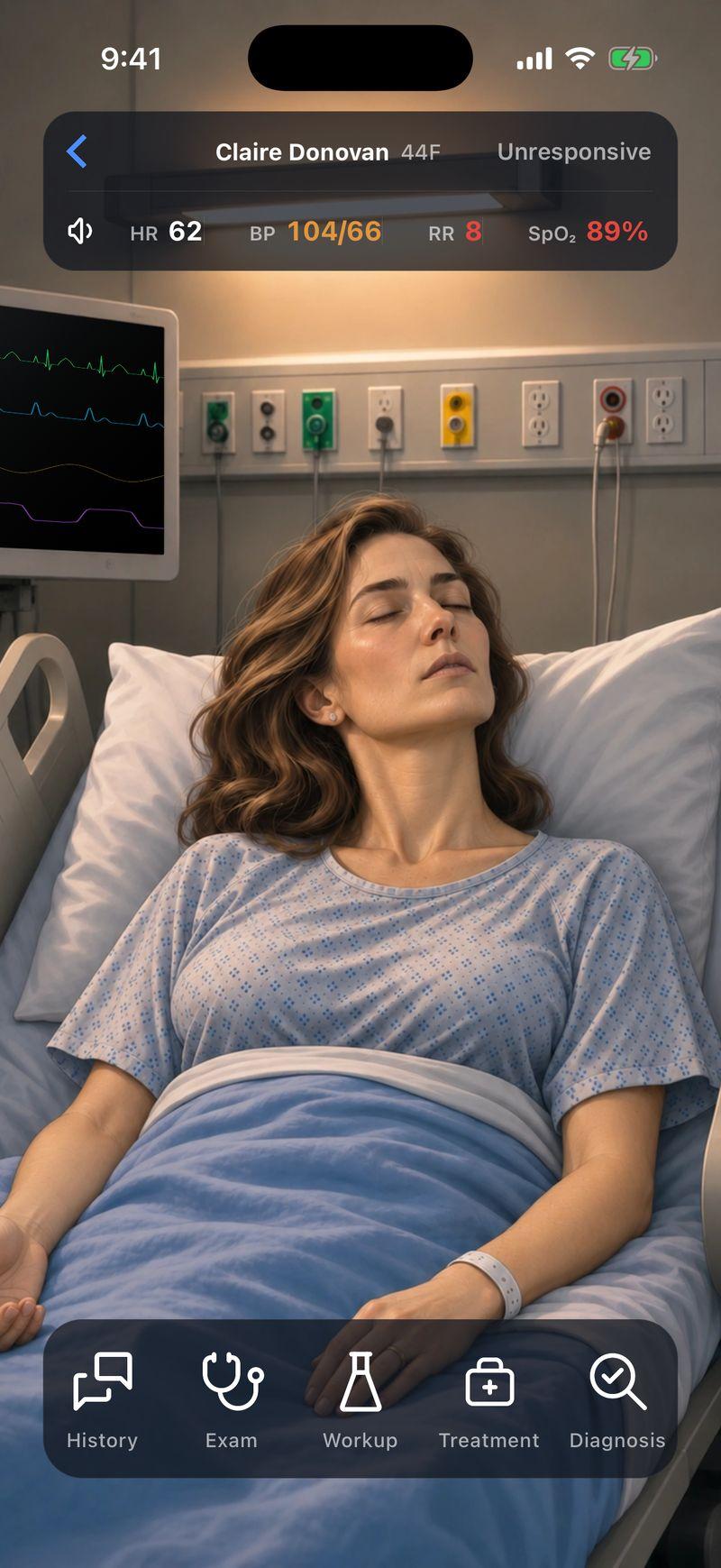
Unresponsive in a 44-year-old woman
“Her husband brought her in this morning because he couldn't wake her up. She's barely responding, and her breathing is slow. He's waiting outside.”
Your challenge
Claire, 44, was brought to the ER after her husband couldn't wake her. She's barely responsive, with slow, snoring breaths and dangerously low oxygen levels. You don't know what's causing it yet. Stabilize her breathing, investigate the cause, and make the decisions that determine what happens next.
After the case, Attending’s Notes explains the decisions that mattered, backed by 10 sources.
Ready to make the call?


Two cases are free. This one is part of Premium.
Spoiler: the diagnosis and what this case teaches
Diagnosis
Opioid Overdose
Lesson 1
Claire's Clues Pointed to Opioid Toxicity
Slow breathing, pinpoint pupils and reduced consciousness form the classic opioid toxidrome.
- Slow breathing matters more than pinpoint pupils
- Snoring can mean the airway is partly blocked
- Starting opioids or taking extra doses raises risk
- A response to naloxone supports the diagnosis
Lesson 2
Breathing Is the Emergency
Restore ventilation immediately. A normal oxygen saturation does not guarantee adequate breathing.
- Normal SpO₂ can hide inadequate breathing
- Open the airway and support slow breathing
- Give naloxone for breathing, not alertness
- Intubate if breathing or airway protection fails
Lesson 3
Other Causes Still Matter
The opioid pattern guides treatment, but unexpected findings should widen the differential.
- Check glucose in every unresponsive patient
- Injury, focal signs or poor recovery need workup
- A positive screen does not prove an overdose
- Sedatives can deepen respiratory depression
Lesson 4
Recovery Must Last Beyond Naloxone
Successful reversal is the beginning of observation, not proof that discharge is safe.
- Breathing can slow again after naloxone wears off
- Discharge only after sustained recovery
- Send naloxone home and teach how to use it
- Review the opioid to prevent another overdose
In the app, every line above opens into the detail behind it: doses, pitfalls and the evidence, with 10 sources linked to the originals.
Claire is a fictional patient. Code Status is for training only and is not intended for real-world patient care, diagnosis, treatment, or clinical decision-making.