Code Status case · Advanced · Premium
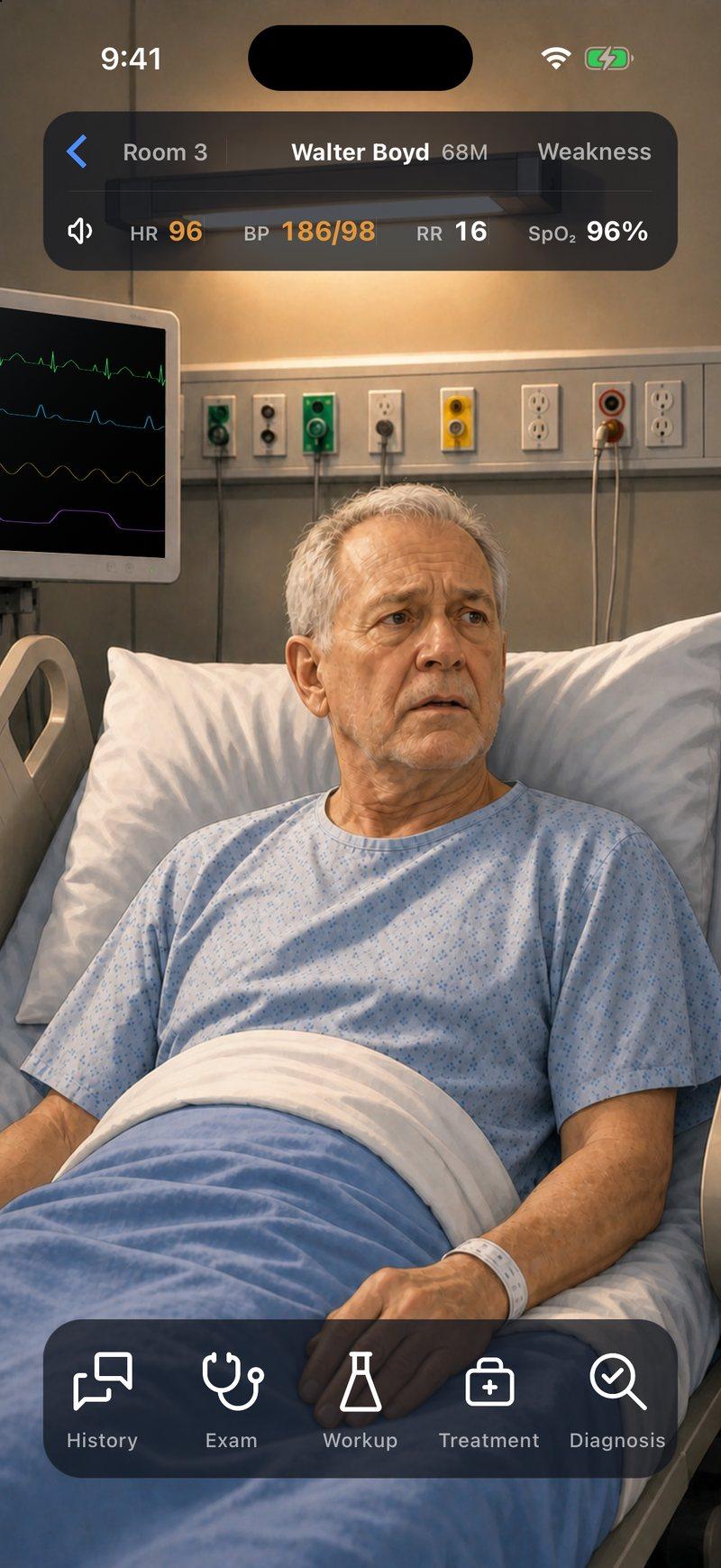
Weakness in a 68-year-old man
“I feel fine. I don't know why everyone is so worried.”
“His wife says his left side went weak and his speech slurred about forty minutes ago.”
Your challenge
Walter insists he feels fine and does not know why everyone is worried. His wife saw his left side go weak and his speech slur forty minutes ago, and he says there is nothing wrong with his arm. A stroke from a clot, bleeding in the brain, low blood sugar, a seizure or a migraine can all look like this. Every minute counts, and so does every number: one detail stands between him and the treatment that could help most.
After the case, Attending’s Notes explains the decisions that mattered, backed by 12 sources.
Ready to make the call?


Two cases are free. This one is part of Premium.
Spoiler: the diagnosis and what this case teaches
Diagnosis
Acute Ischemic Stroke
Lesson 1
Measure Stroke Timing From Last Known Well
An exact onset or last-known-well time helps determine treatment eligibility.
- Last known well is the last time at baseline
- Check glucose now. Low levels can mimic stroke
- A low stroke score can still hide a disabling deficit
- Brainstem or cerebellar stroke can score low
Lesson 2
Use CT to Exclude Brain Hemorrhage First
The first urgent CT question is simple: is there blood?
- Exclude bleeding on CT before thrombolysis
- A normal early CT does not exclude stroke
- CT angiography finds a large vessel occlusion
- Perfusion imaging guides late treatment
- Do not delay reperfusion treatment for routine tests
Lesson 3
Offer Thrombolysis for Eligible Disabling Stroke
Eligibility depends on timing, disability, and bleeding risk.
- Disabling deficits may qualify despite a low stroke score
- Give thrombolysis within 4.5 hours of last known well
- No thrombolysis with bleeding or BP still ≥185/110
- Give tenecteplase as a single IV injection dosed by weight
Lesson 4
Thrombectomy Without Delaying Thrombolysis
Reperfusion decides the pressure target.
- Without reperfusion, avoid routine BP lowering
- After thrombolysis, keep BP below 180/105 for 24 hours
- Major artery occlusion needs thrombectomy review
- Give eligible thrombolysis while arranging transfer
- Use monitored stroke care after reperfusion
In the app, every line above opens into the detail behind it: doses, pitfalls and the evidence, with 12 sources linked to the originals.
Walter is a fictional patient. Code Status is for training only and is not intended for real-world patient care, diagnosis, treatment, or clinical decision-making.