Learn · Cardiology · Beginner
Anterior STEMI
The ECG from a Code Status case, and the decisions that matter in the first hour.
Written by Karim Ali, MD, board-certified emergency physician. Reviewed November 2026.
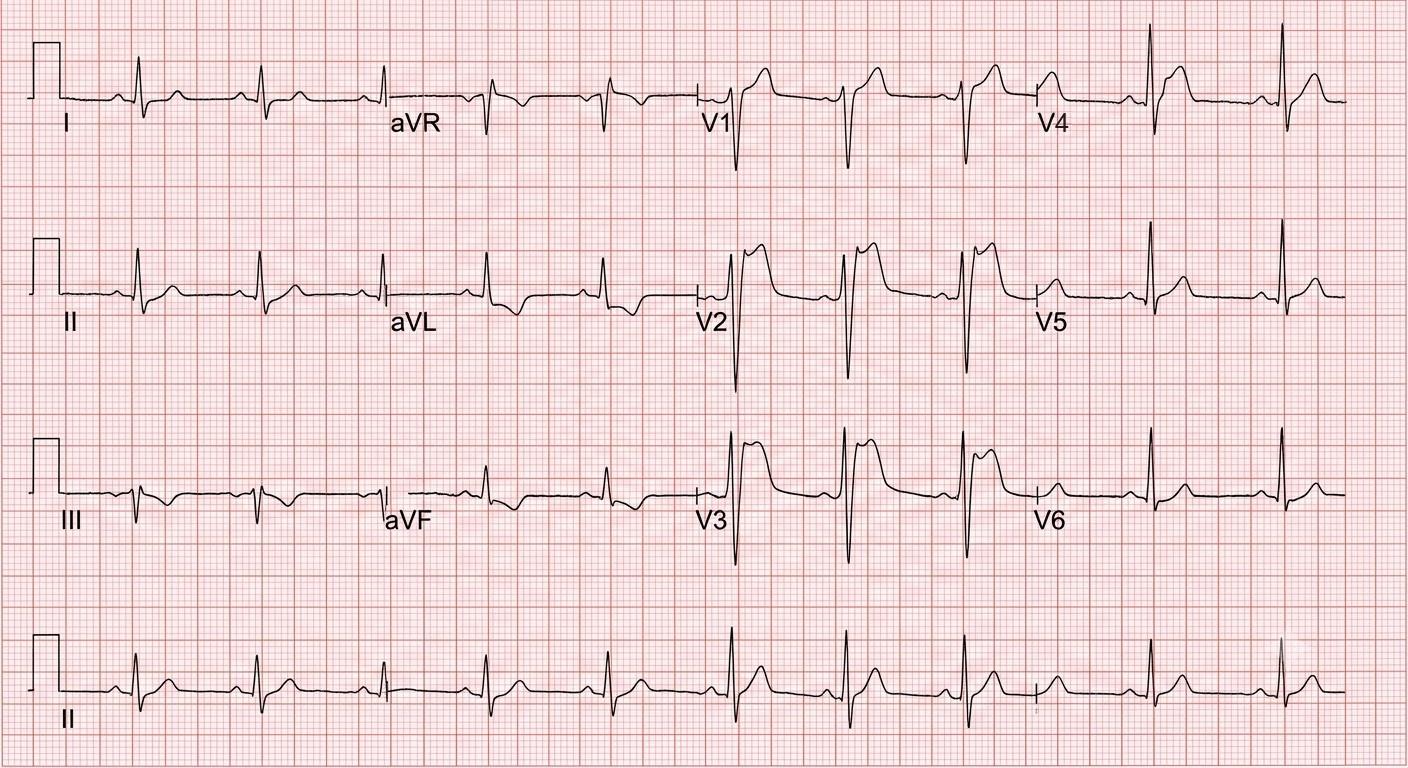
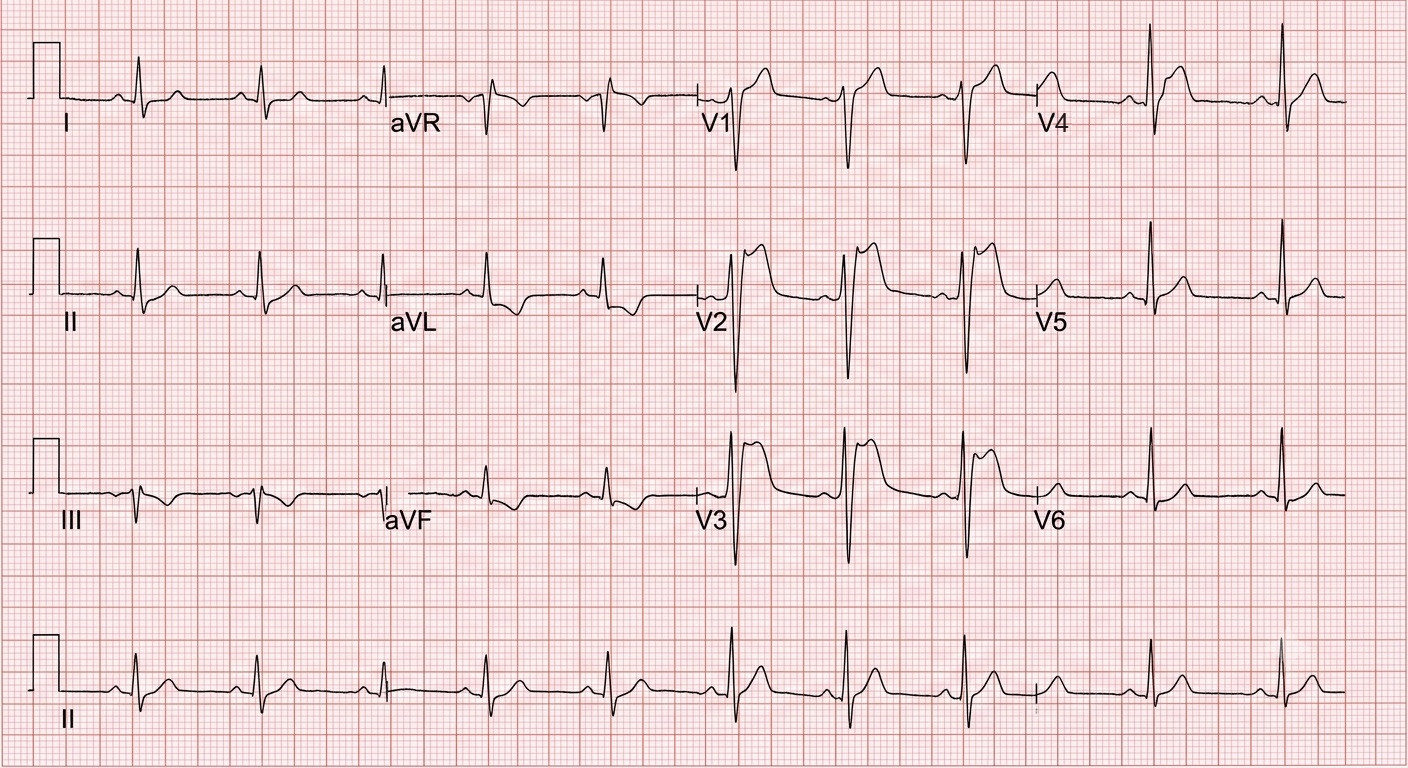
V1 to V4 cover the front of the heart, supplied by the LAD. Here the ST elevation is clearest in V2, V3 and V4.
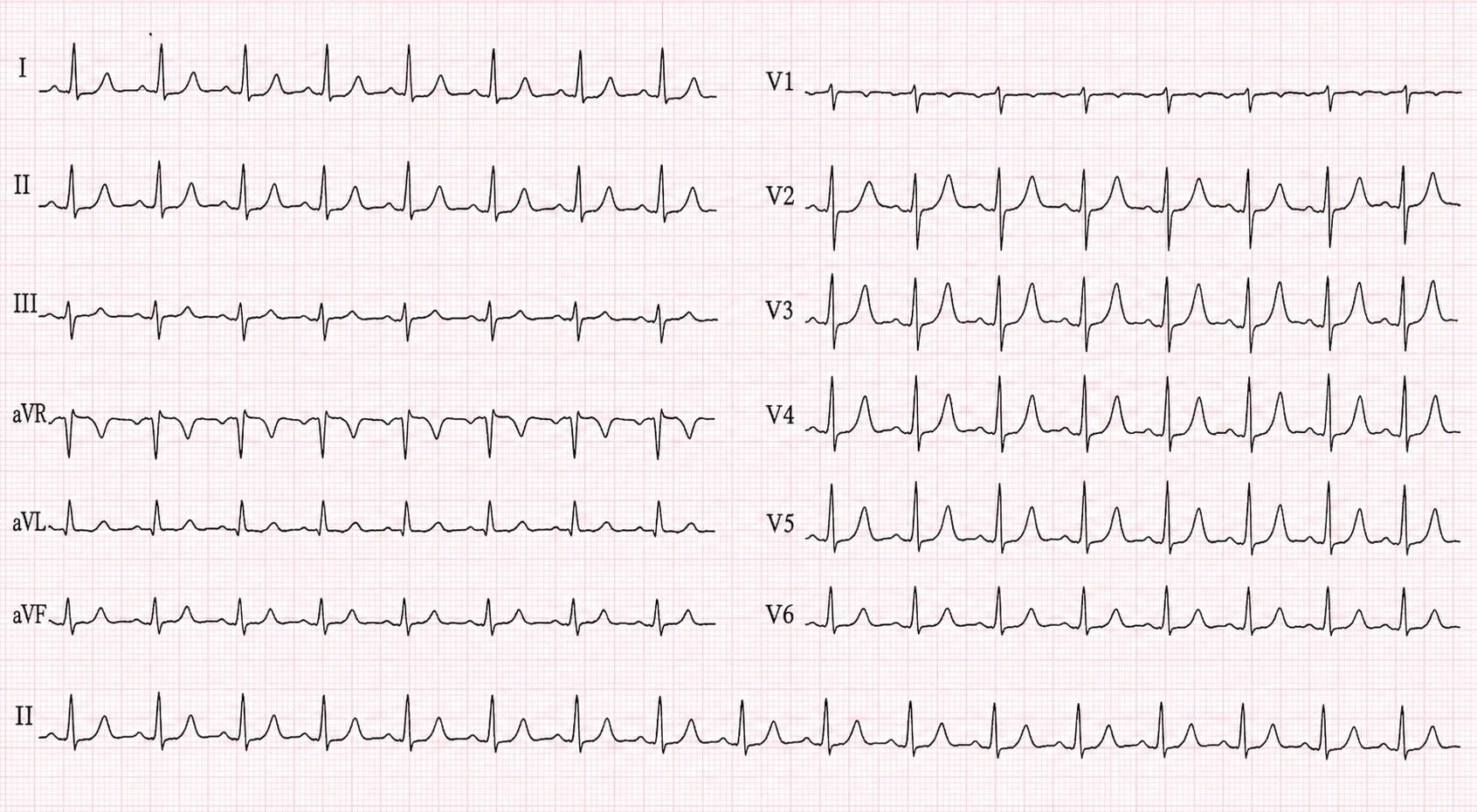
Michael Turner’s ECG, from his case. Open it full size
Reading this ECG
Look first at the ST segment, the stretch between the end of the QRS and the start of the T wave. Normally it sits level with the baseline. Measure it at the J point, where the QRS ends.
Here, in V2 and V3, it sits about 9 mm above the baseline and stays up until it runs into the T wave. V4 is raised as well. V1 is raised only slightly, and on its own it would not be convincing.
What makes this a STEMI is the pattern: ST elevation in neighboring leads that look at the same wall of the heart. The leads that look at the bottom of the heart (II, III and aVF) and the side (I, aVL, V5 and V6) show none.
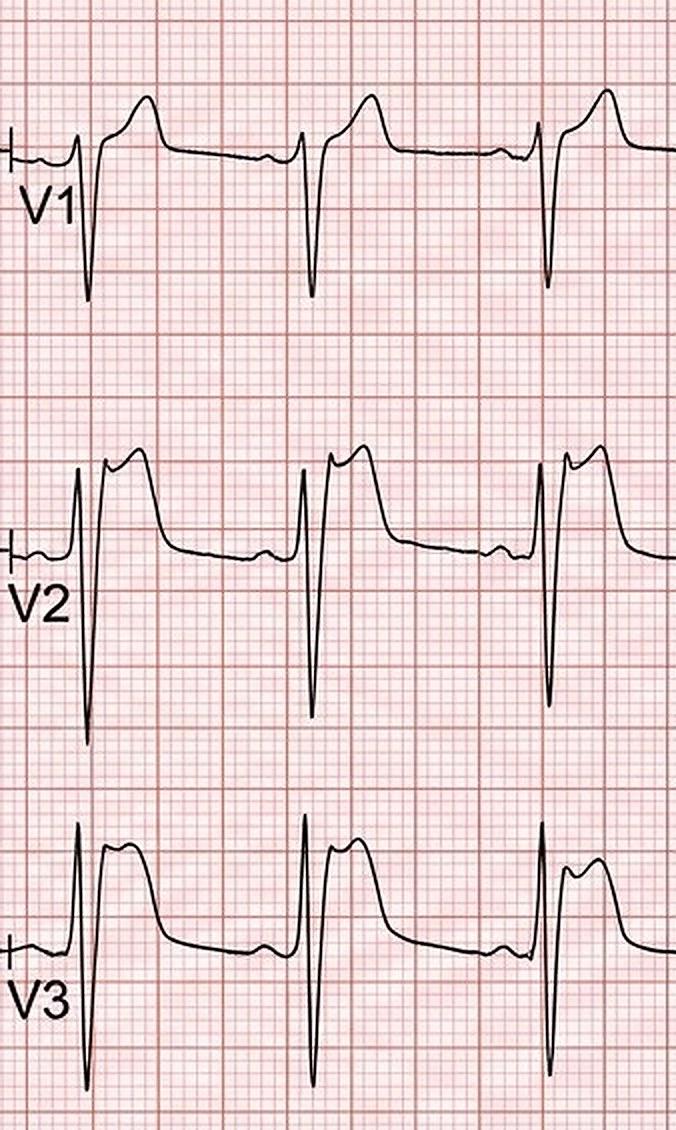
V1, V2 and V3, enlarged
The first hour
From the door to the cath lab, in order.
First 10 minutes
Get the ECG and read it
Chest pain gets an ECG within 10 minutes of arrival. If it shows STEMI, that is the diagnosis. Do not wait for a troponin: the first one is often normal this early.
Right away
Call the cath lab
The treatment is opening the artery. At a hospital with a cath lab, the goal is to do it within 90 minutes of first medical contact, so call early and let the whole team start moving. Where the artery cannot be opened within about 120 minutes, clot-dissolving medicine (fibrinolysis) is given instead, unless bleeding risk rules it out, and the patient is transferred.
Before blood thinners
Protect the artery, safely
Aspirin, chewed, unless it has already been given. Michael’s EMS crew gave it. The cath team adds a second antiplatelet and an anticoagulant such as heparin, following local protocol. First, make sure this is not an aortic dissection: tearing pain or a pulse difference between the arms should stop you, and normal findings do not rule it out.
For the pain
Treat symptoms without causing harm
Nitroglycerin can ease the pain if the systolic pressure is at least 90 and he has not taken an erectile dysfunction medicine in the past 48 hours. Oxygen only if saturation is below 90%. At 98%, Michael does not need it. Morphine only for severe pain that persists. Avoid anti-inflammatory pain medicines like ibuprofen. Feeling better does not mean the artery is open.
Until the cath lab
Watch for shock
Recheck his pain, blood pressure, rhythm and skin. Worsening pain, a new arrhythmia, a falling pressure or cold, clammy skin can mean shock or a complication. Keep him on the monitor with defibrillator pads on.
References (4)
- 2025 ACC/AHA/ACEP/NAEMSP/SCAI Guideline for the Management of Patients With Acute Coronary Syndromes. Journal of the American College of Cardiology, 2025.
- Fourth Universal Definition of Myocardial Infarction. Journal of the American College of Cardiology, 2018.
- Effect of Oxygen Therapy on Cardiovascular Outcomes in Relation to Baseline Oxygen Saturation. JACC: Cardiovascular Interventions, 2020.
- 2022 ACC/AHA Guideline for the Diagnosis and Management of Aortic Disease. Journal of the American College of Cardiology, 2022.
In the app, Michael’s Attending’s Notes go deeper: doses, pitfalls and the evidence, with 11 sources linked to the originals.
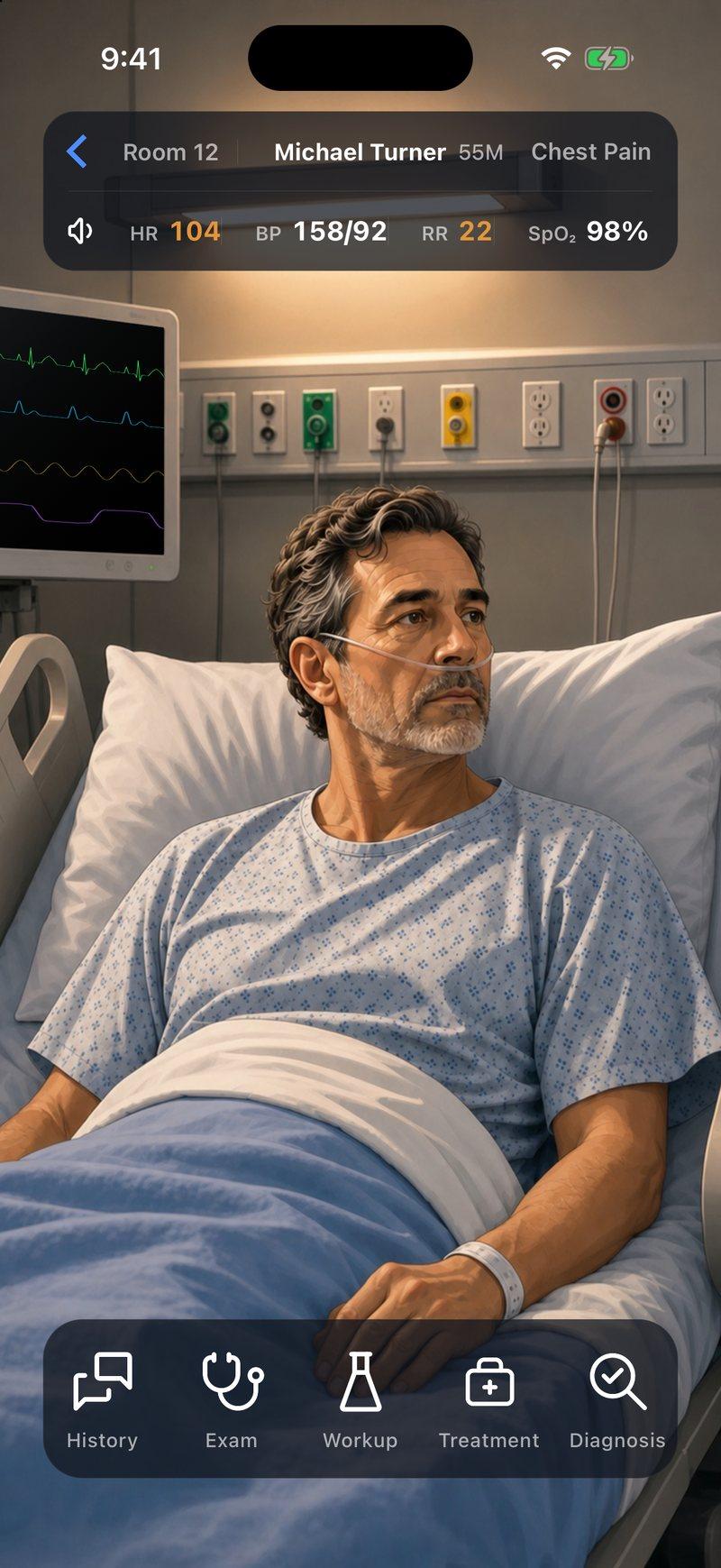
Now make the call yourself
Michael Turner, 55, arrives with two hours of chest pain. Take the history, examine him, read his ECG and decide what happens next. His case is one of the two free cases.


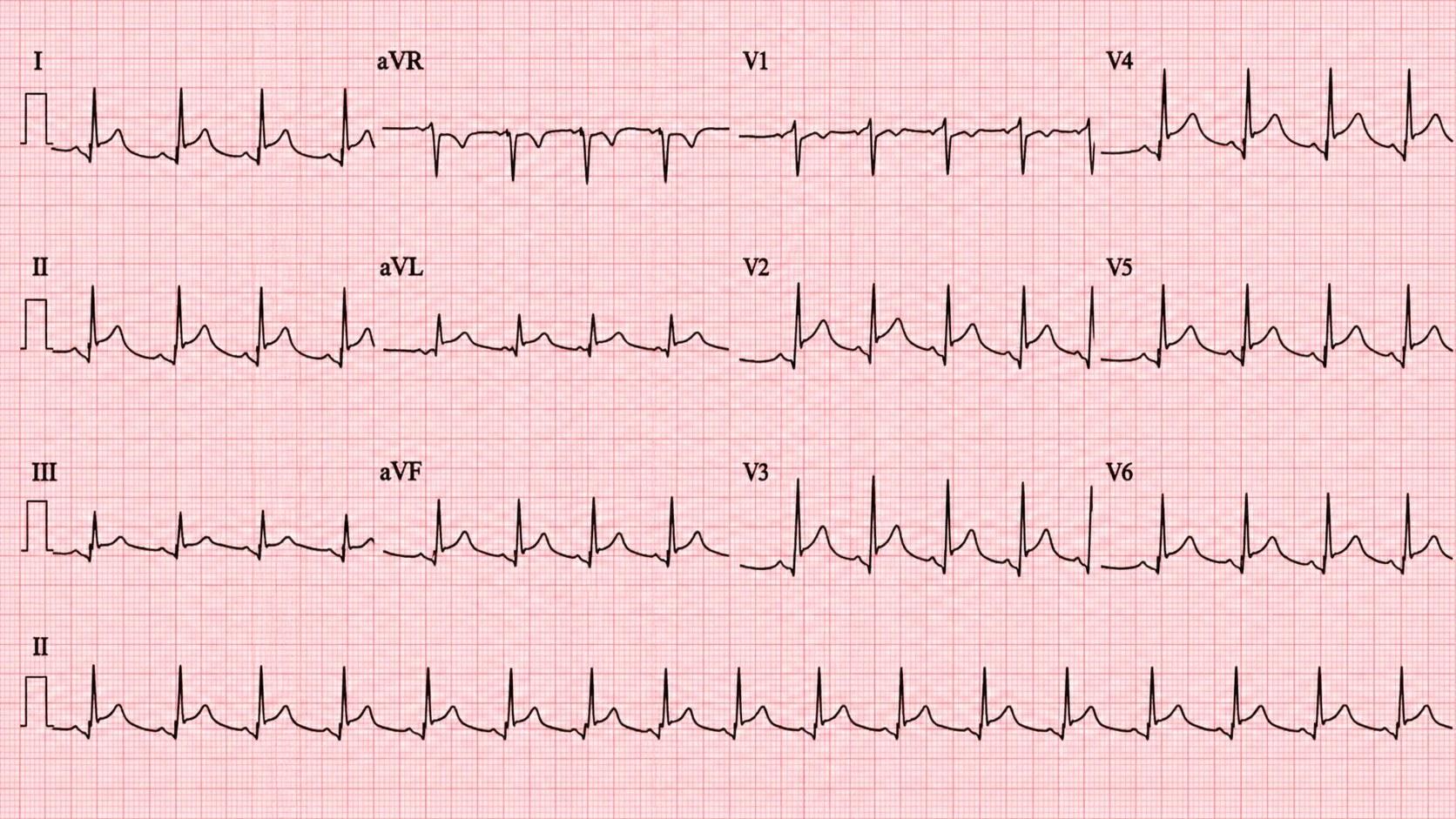
Michael is a fictional patient, and this page is a summary for learning. Code Status is for training only and is not intended for real-world patient care, diagnosis, treatment, or clinical decision-making.