Code Status case · Beginner · Free
Chest pain in a 55-year-old man
“This pain feels different than anything I've had before.”
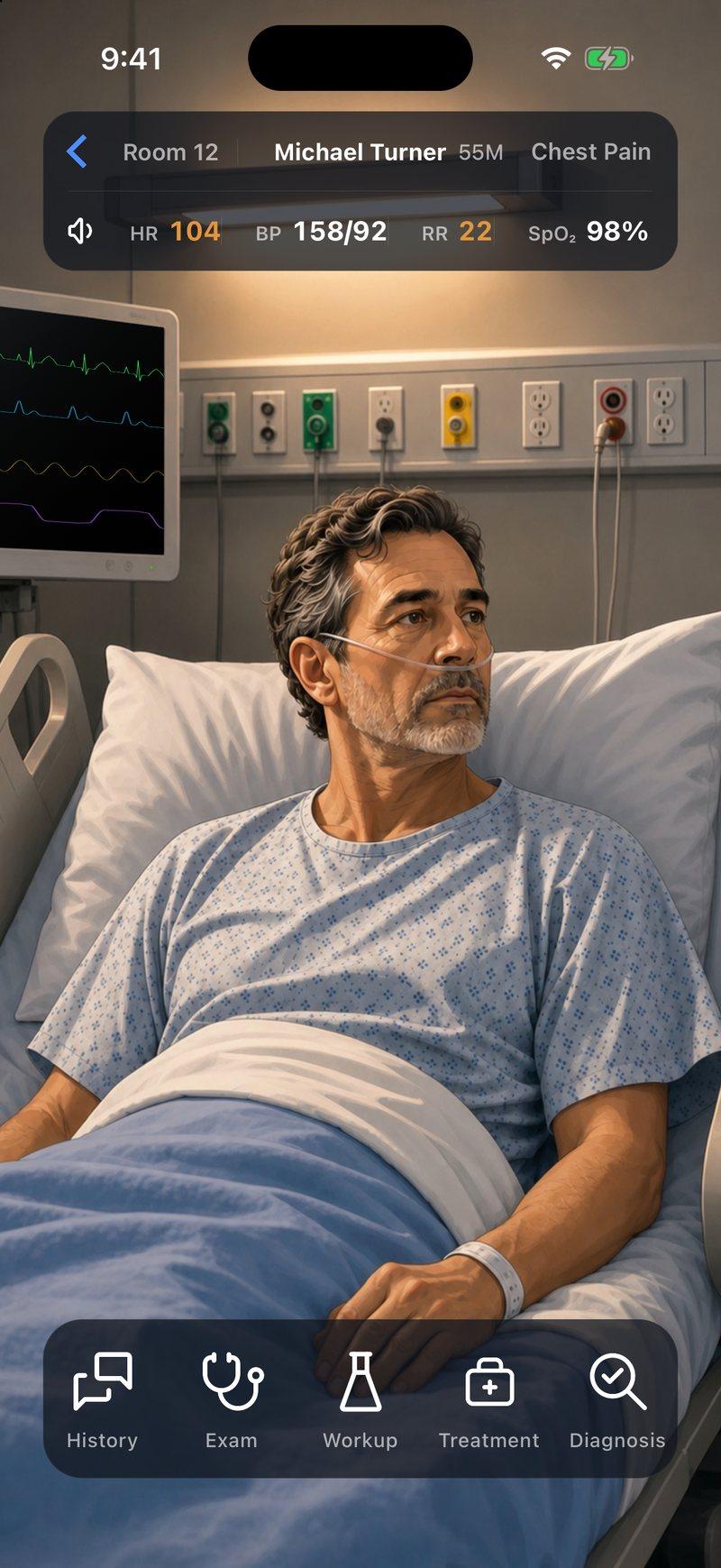
“Chest pain started about two hours ago. EMS gave aspirin. His saturation was normal on room air but he was placed on oxygen for comfort. He's uncomfortable but stable.”
Your challenge
Michael's chest pain started two hours ago. EMS has already given aspirin, and he says it feels different from anything he has had before. The list is long and some of it is deadly: a heart attack, a tear in the aorta, a clot in the lungs, inflammation around the heart, or simple reflux. One early test can change everything, but only if you order it and read it yourself.
After the case, Attending’s Notes explains the decisions that mattered, backed by 11 sources.
Ready to make the call?


This case is one of the two free cases.
Spoiler: the diagnosis and what this case teaches
Diagnosis
Anterior STEMI
Lesson 1
Recognize Anterior STEMI
- V1–V4 ST elevation suggests anterior STEMI
- Read the ECG in 10 minutes
- Do not wait for troponin when the ECG shows STEMI
- Measure ST elevation at the J point in neighboring leads
Lesson 2
Reopen the Blocked Coronary Artery
Recognizing STEMI only helps if blood flow is restored.
- Activate the cath lab to reopen the blocked artery
- Check aspirin allergy, bleeding, and prior dosing
- Antiplatelets and anticoagulation limit clotting
- Do not delay cath lab activation while waiting for a consult
Lesson 3
Treat Symptoms Safely
Feeling better does not mean the blocked artery is open.
- Check BP and nitrate contraindications first
- Give oxygen for hypoxemia
- Reserve morphine for severe persistent pain
- Avoid nonaspirin anti-inflammatory pain medicines
Lesson 4
Watch for Shock and Dangerous Alternatives
Consider dangerous alternatives without delaying treatment for a clear STEMI.
- Watch for worsening pain, arrhythmia, or shock
- Do not delay artery opening for routine imaging
- Normal findings do not rule out aortic dissection
- Reassess while awaiting the cath lab
In the app, every line above opens into the detail behind it: doses, pitfalls and the evidence, with 11 sources linked to the originals.
Michael is a fictional patient. Code Status is for training only and is not intended for real-world patient care, diagnosis, treatment, or clinical decision-making.