Code Status case · Advanced · Premium
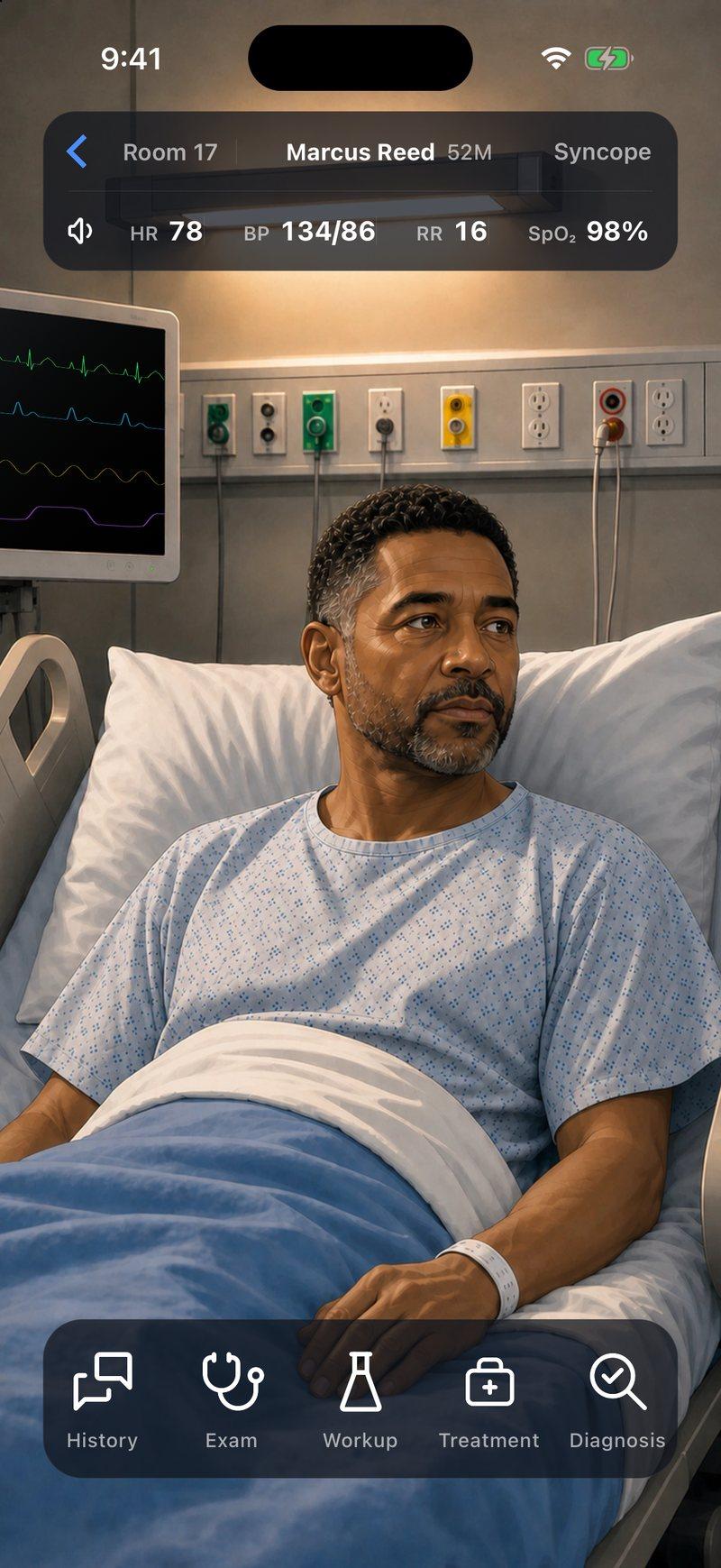
Syncope in a 52-year-old man
“I fainted at work this morning. I feel completely normal now.”
“Fainted at work about an hour ago. A coworker saw it and thought he had a couple of brief jerks. He woke up right away and was talking normally. No injury or incontinence.”
Your challenge
Marcus fainted at work an hour ago, and now he feels completely normal and has a meeting at two. A coworker thought there were a couple of brief jerks. A simple faint, a seizure, a clot in the lungs, a heart attack or a heart rhythm problem can all end with someone waking up fine on the floor. The danger in this case hides in one line of his history and one tracing, and a patient who feels well is the hardest one to keep.
After the case, Attending’s Notes explains the decisions that mattered, backed by 10 sources.
Ready to make the call?


Two cases are free. This one is part of Premium.
Spoiler: the diagnosis and what this case teaches
Diagnosis
Arrhythmic Syncope
Lesson 1
Rapid Recovery Suggests Syncope, Not the Cause
Low brain blood flow, then quick recovery.
- Brief collapse with rapid recovery suggests syncope
- Brief jerking can occur during syncope
- Ask witnesses to describe the collapse and recovery
- Persistent confusion is atypical of syncope
- Syncope is a symptom, not a diagnosis
Lesson 2
Use the History and ECG to Assess Syncope Risk
A prior heart attack, palpitations, and an abnormal ECG raise cardiac concern.
- Trigger and warning signs suggest vasovagal syncope
- Exertion or palpitations suggest cardiac syncope
- Wide-complex runs suggest ventricular rhythm
- Check ECG for block, long QT, or tachycardia
Lesson 3
Test for the Cause the Story Suggests
Testing follows the suspected cause, not the word syncope.
- Head CT for neurologic signs or head injury
- Tailor labs to bleeding, ischemia, or arrhythmia risk
- Continuous monitoring catches brief arrhythmias
- Risk scores support but do not replace judgment
Lesson 4
Suspected Cardiac Syncope Needs Monitored Evaluation
Feeling normal afterward does not make the next episode safe.
- Low-risk vasovagal syncope can go home
- High-risk syncope needs cardiac monitoring
- Feeling well does not make ventricular arrhythmia safe
- Correct electrolytes and continue cardiac evaluation
In the app, every line above opens into the detail behind it: doses, pitfalls and the evidence, with 10 sources linked to the originals.
Marcus is a fictional patient. Code Status is for training only and is not intended for real-world patient care, diagnosis, treatment, or clinical decision-making.