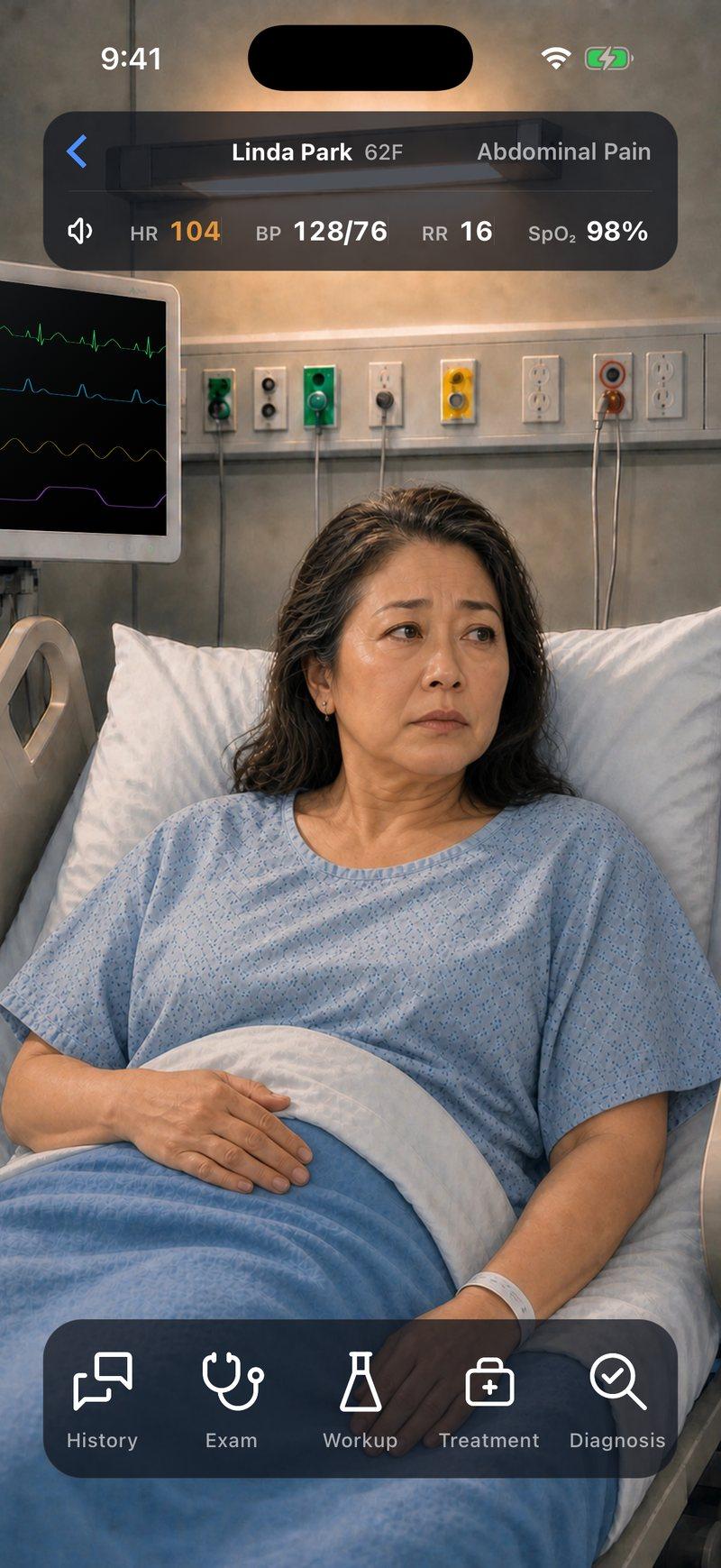
Code Status case · Intermediate · Premium
Abdominal pain in a 62-year-old woman
“My stomach's been hurting since yesterday. The pain comes in waves and I've vomited four times.”
“Abdominal pain in waves since yesterday evening. She's vomited four times, twice since arrival. No bowel movement since yesterday or gas since last night. Pain is seven out of ten. Mildly tachycardic but otherwise stable.”
Your challenge
Linda's pain comes in waves, and she has vomited four times, twice since she arrived. She has not passed a bowel movement or gas since last night. A blocked bowel, a bowel that has stopped moving, severe constipation, a tumor or a gut that is losing its blood supply can all start this way, and some of them cannot wait. The scan tells you where the problem is; what you do with the tube, the fluids and the surgeon decides how the next few hours go.
After the case, Attending’s Notes explains the decisions that mattered, backed by 10 sources.
Ready to make the call?


Two cases are free. This one is part of Premium.
Spoiler: the diagnosis and what this case teaches
Diagnosis
Adhesive Small Bowel Obstruction
Lesson 1
Pain, Vomiting, Distention Suggest Obstruction
Prior abdominal surgery raises the likelihood of an adhesive blockage.
- Obstruction causes waves of painful bowel contraction
- No stool or gas with vomiting suggests obstruction
- Ask about prior abdominal surgery, even years ago
- New constant pain can signal bowel ischemia
Lesson 2
Use CT to Find Obstruction and Threatened Bowel
Locate the blockage and look for reduced blood flow or perforation.
- Abdominal X-ray can support obstruction
- Dilated then collapsed bowel locates obstruction
- Passing stool or gas does not exclude obstruction
- Reduced CT enhancement suggests bowel ischemia
Lesson 3
Replace Fluid Losses and Relieve Bowel Distention
Replace fluid losses while keeping the patient nothing by mouth.
- Keep fasting and give IV fluids for losses
- Replace vomiting-related chloride and potassium loss
- Treat pain and nausea
- Nasogastric tube relieves distention and vomiting
- Give antibiotics for ischemia, perforation, or sepsis
Lesson 4
Threatened Bowel Needs Urgent Surgical Care
Deterioration needs urgent surgery. Stable patients need close reassessment during nonoperative treatment.
- Peritonitis or strangulation needs immediate surgery
- If stable with no bowel threat, consider nonoperative care
- Obstruction at 72 hours needs a surgical plan
- Water-soluble contrast can predict need for surgery
In the app, every line above opens into the detail behind it: doses, pitfalls and the evidence, with 10 sources linked to the originals.
Linda is a fictional patient. Code Status is for training only and is not intended for real-world patient care, diagnosis, treatment, or clinical decision-making.