Code Status case · Intermediate · Premium
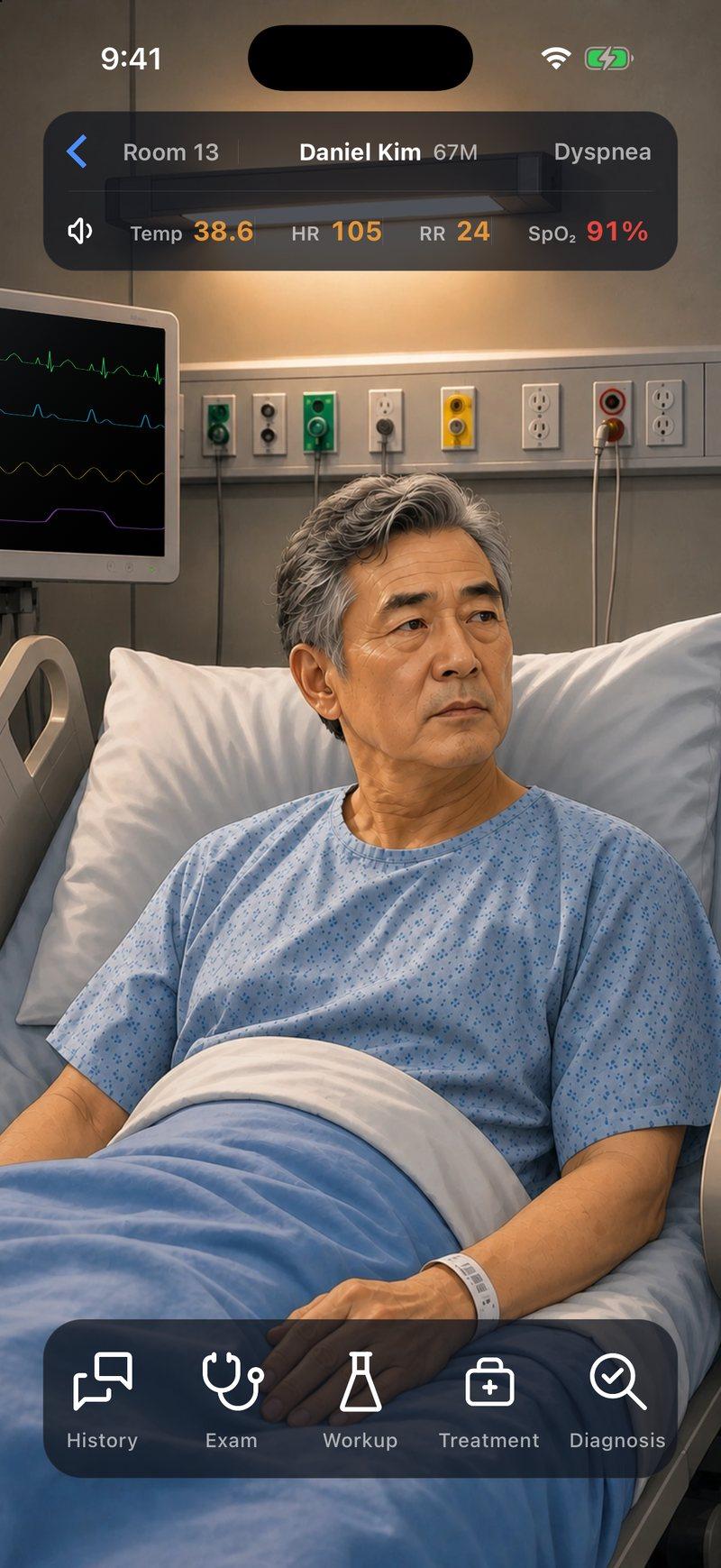
Shortness of breath in a 67-year-old man
“I've been coughing and short of breath for three days.”
“Three days of cough and fever, more short of breath today. He's 91 percent on room air and became short of breath walking in.”
Your challenge
Daniel walks the same loop every morning, and today he could not finish it. He has had a cough and fever for three days, and he got short of breath just walking in. An infection in the lungs, a viral illness, heart failure, a heart attack and a clot can all explain that. Diagnosing him is only half the case. The other half is deciding where he is safe, and how he does at rest may not tell the whole story.
After the case, Attending’s Notes explains the decisions that mattered, backed by 11 sources.
Ready to make the call?


Two cases are free. This one is part of Premium.
Spoiler: the diagnosis and what this case teaches
Diagnosis
Community-Acquired Pneumonia
Lesson 1
New Consolidation Suggests Pneumonia
An early normal chest X-ray does not exclude pneumonia.
- New right-base opacity supports pneumonia
- Fever, cough, and focal crackles fit pneumonia
- Chest imaging must fit symptoms and exam
- Lung ultrasound can show subpleural consolidation
Lesson 2
Breathing, Circulation, and Mental Status Set Severity
Two separate questions: does he need the hospital and does he need the ICU?
- New oxygen needs can outweigh a low-risk score
- Pneumonia Severity Index helps decide admission
- Severe pneumonia: 1 major or ≥3 minor criteria
- Check oxygen while walking for desaturation
Lesson 3
Broaden Antibiotics Only for Specific Resistance Risks
Cover the common organisms. Broaden only for a reason you can name.
- Nonsevere inpatient CAP: ceftriaxone + azithromycin
- Facility residence alone does not justify broad antibiotics
- Low procalcitonin alone cannot withhold antibiotics
- Give antibiotics promptly, then use the shortest course
Lesson 4
Choose the Level of Care After Reassessment
A low mortality score cannot make persistent hypoxemia safe for home care.
- Treat the hypoxemia, then reassess
- Discharge needs stable oxygen and a workable plan
- Admit for persistent new oxygen need
- Ventilation or vasopressors need ICU care
In the app, every line above opens into the detail behind it: doses, pitfalls and the evidence, with 11 sources linked to the originals.
Daniel is a fictional patient. Code Status is for training only and is not intended for real-world patient care, diagnosis, treatment, or clinical decision-making.