Code Status case · Beginner · Premium
Shortness of breath in a 66-year-old woman
“I can't lie flat anymore. I've been sleeping in the recliner.”
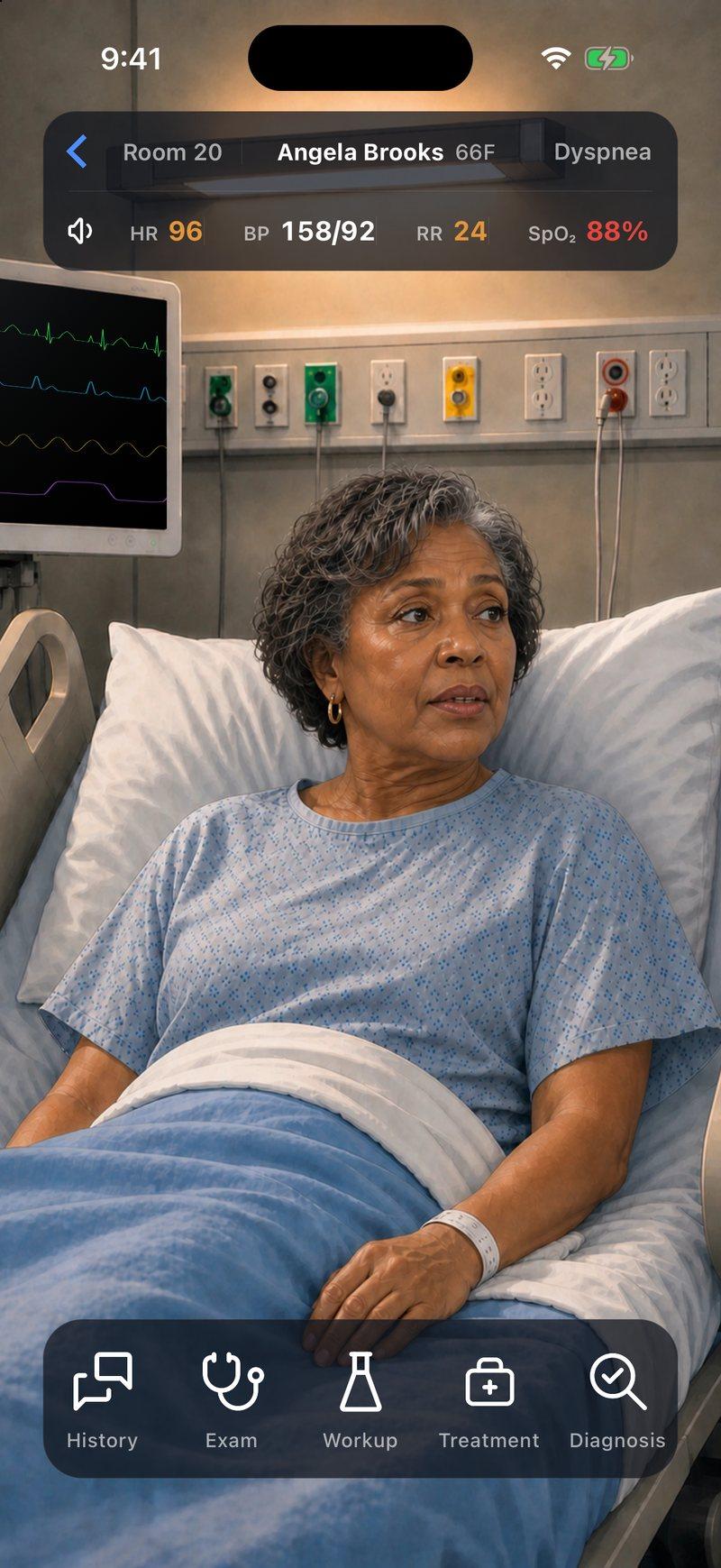
“Known heart failure, ejection fraction in the low thirties, not on home oxygen. About a week of worsening shortness of breath, now sleeping in a recliner. She's gained eight pounds and ran out of furosemide about ten days ago. Oxygen is 88% on room air.”
Your challenge
Angela has been sleeping in her recliner because lying flat leaves her breathless. Ten days ago she ran out of the water pill that keeps her heart failure in check, and the week since has been a slow slide. That story explains a lot, but a heart attack, a lung infection or a clot can tip a weak heart over too, and finding the trigger matters. Then you have to clear the fluid while keeping her circulation safe.
After the case, Attending’s Notes explains the decisions that mattered, backed by 11 sources.
Ready to make the call?


Two cases are free. This one is part of Premium.
Spoiler: the diagnosis and what this case teaches
Diagnosis
Acute Decompensated Heart Failure
Lesson 1
Assess Congestion and Blood Flow to the Organs
Treat fluid buildup differently when circulation is failing.
- Raised neck veins and edema support congestion
- Cool skin, confusion, oliguria suggest hypoperfusion
- Congestion with poor perfusion suggests shock
- A sudden blood pressure rise can shift fluid into the lungs
Lesson 2
Interpret Heart Failure Tests With the Bedside Findings
Imaging and blood tests help assess congestion and identify a trigger.
- B-lines suggest lung fluid, not its cause
- Read X-ray for congestion and other causes
- ECG and troponin help identify the trigger
- Natriuretic peptides can clarify heart failure
Lesson 3
Treat Congestion While Protecting Circulation
Oxygen, breathing support, nitrates, and diuretics have different indications.
- Noninvasive ventilation for respiratory distress
- Nitrates for hypertensive pulmonary edema
- The home loop-diuretic dose guides initial IV dosing
- Avoid routine IV fluids when congested
Lesson 4
When Heart Failure Becomes Shock
Hypotension with poor perfusion changes the immediate treatment priorities.
- Hypoperfusion can signal shock before hypotension
- In shock, reassess before more nitrates or diuretics
- New ischemia, arrhythmia, or murmur needs urgent review
- Better oxygenation does not prove better perfusion
In the app, every line above opens into the detail behind it: doses, pitfalls and the evidence, with 11 sources linked to the originals.
Angela is a fictional patient. Code Status is for training only and is not intended for real-world patient care, diagnosis, treatment, or clinical decision-making.