Code Status case · Intermediate · Premium
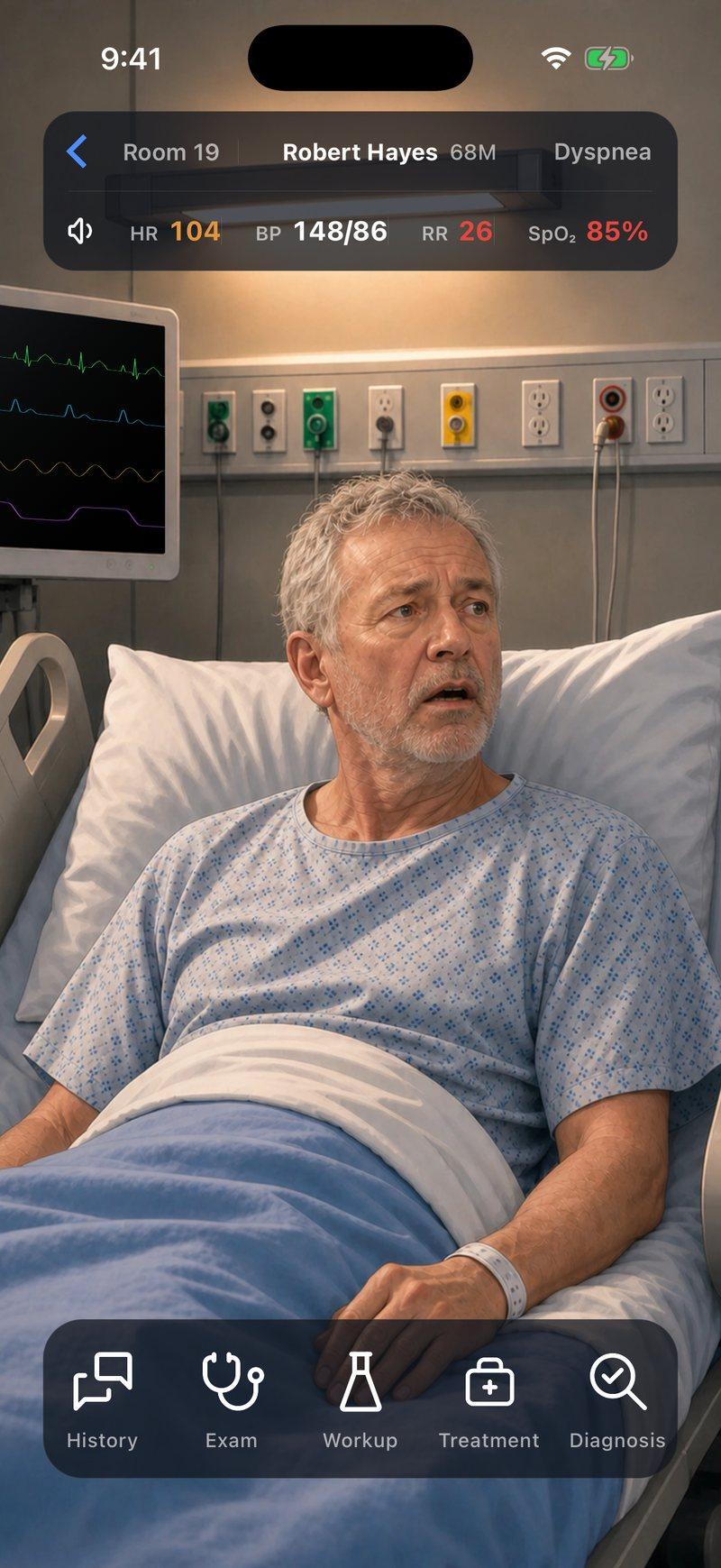
Shortness of breath in a 68-year-old man
“I can't get enough air. This is worse than usual.”
“Emphysema, not on home oxygen. Three days of worsening breathing after a bad cold. Rescue inhaler every couple of hours without lasting relief. He's moving air poorly and speaking in short phrases.”
Your challenge
Robert has emphysema and has lived with short breath for years, so when he says this is worse than usual, believe him. A bad cold three days ago started it, and his rescue inhaler no longer lasts. A flare of his lung disease is the likely story, but pneumonia, heart failure, a clot or a collapsed lung can hide inside it. This case is as much about restraint as rescue: how to give oxygen safely, and when breathing support is really needed.
After the case, Attending’s Notes explains the decisions that mattered, backed by 10 sources.
Ready to make the call?


Two cases are free. This one is part of Premium.
Spoiler: the diagnosis and what this case teaches
Diagnosis
Acute COPD Exacerbation
Lesson 1
A COPD Flare Can Have Another Cause
Pneumonia, heart failure, embolism, and pneumothorax can resemble a flare.
- Dyspnea, cough, sputum suggest COPD flare
- Focal signs or hypoxemia suggest another cause
- X-ray checks pneumonia, edema, pneumothorax
- Mild BNP or WBC rises do not establish the cause
Lesson 2
Start Bronchodilators and Steroids First
Open the airways, treat inflammation, and give antibiotics when indicated.
- Albuterol with ipratropium, repeat by response
- Usually give prednisone 40 mg daily for 5 days
- Purulence & symptoms or ventilation favors antibiotics
- Magnesium and heparin do not treat COPD obstruction
Lesson 3
Titrate Oxygen and Support Failing Ventilation
Treat the hypoxemia first, aim for 88 to 92 percent.
- Treat hypoxemia with oxygen even when CO₂ is elevated
- Target 88–92% while awaiting blood gas
- Too much oxygen can raise CO₂
- Use noninvasive ventilation (NIV) for persistent acidosis
Lesson 4
Escalate Ventilation or Persistent Oxygen Need
What the treated patient still needs decides the next step.
- Recheck effort, rate, and blood gases in 1–2 hours
- Falling pH or drowsiness during NIV suggests failure
- High CO₂ alone does not require intubation
- Admit for persistent new oxygen need
In the app, every line above opens into the detail behind it: doses, pitfalls and the evidence, with 10 sources linked to the originals.
Robert is a fictional patient. Code Status is for training only and is not intended for real-world patient care, diagnosis, treatment, or clinical decision-making.