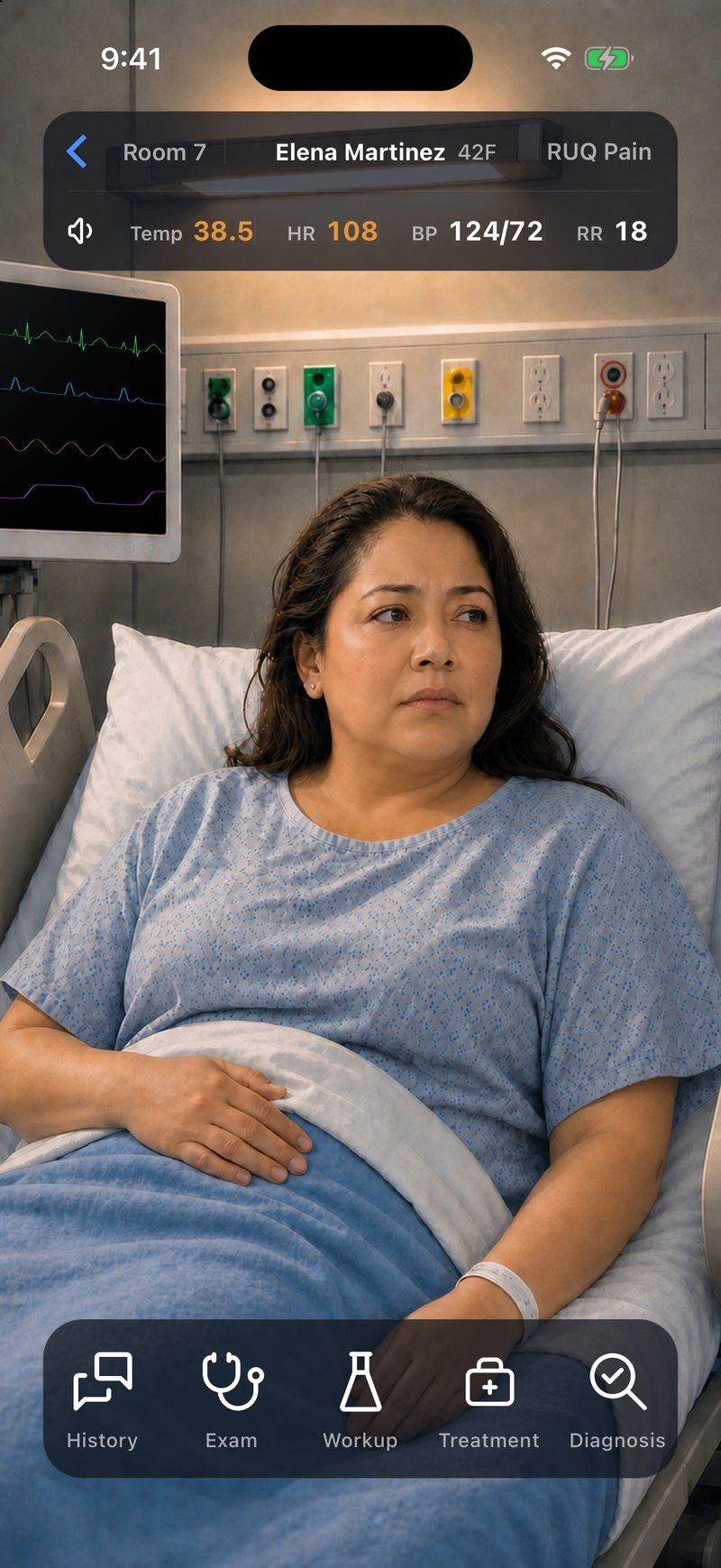
Code Status case · Intermediate · Premium
Upper abdominal pain in a 42-year-old woman
“I've had this pain before but it usually goes away.”
“Upper abdominal pain since dinner last night. She has had similar episodes before but this one has not resolved. Nauseated and vomited twice.”
Your challenge
Elena has had this pain before, and it has always gone away on its own. This time it started after dinner last night, and it is still there under her ribs. The difference between pain that passes and pain that stays is the heart of this case. Gallstones, an inflamed gallbladder, an inflamed pancreas, a kidney infection and even pneumonia can all hurt in the upper belly, and finding stones on a scan is only the start of the answer.
After the case, Attending’s Notes explains the decisions that mattered, backed by 10 sources.
Ready to make the call?


Two cases are free. This one is part of Premium.
Spoiler: the diagnosis and what this case teaches
Diagnosis
Acute Cholecystitis
Lesson 1
Inflammation Separates Cholecystitis From Colic
Fever and persistent pain raise concern but the full clinical pattern matters.
- Fever and persistent pain support cholecystitis
- Biliary colic is obstruction without inflammation
- Murphy’s sign is pain that stops inspiration on palpation
- Fever and an elevated white count support inflammation
Lesson 2
Gallstones Alone Do Not Diagnose Cholecystitis
Finding stones is only the first step. Look for inflammation.
- Ultrasound is the first gallbladder study
- CT can diagnose but ultrasound comes first
- HIDA scan can clarify an inconclusive ultrasound
- Look for inflammation on ultrasound, not just gallstones
Lesson 3
An Infected Bile Duct Needs Drainage
A cystic duct stone, common duct stone, and migrating stone cause different problems.
- Cystic duct obstruction can inflame the gallbladder
- Liver tests can suggest common bile duct disease
- Cholangitis is a bile duct infection that needs drainage
- Gallstones can also cause pancreatitis
Lesson 4
Treat Early and Arrange Gallbladder Surgery
Treat the infection and pain, then move toward definitive care.
- Start antibiotics when cholecystitis is diagnosed
- Treat biliary pain early
- Keep the patient fasting and consult surgery
- Controlled, uncomplicated biliary colic can go home
In the app, every line above opens into the detail behind it: doses, pitfalls and the evidence, with 10 sources linked to the originals.
Elena is a fictional patient. Code Status is for training only and is not intended for real-world patient care, diagnosis, treatment, or clinical decision-making.