Code Status case · Intermediate · Premium
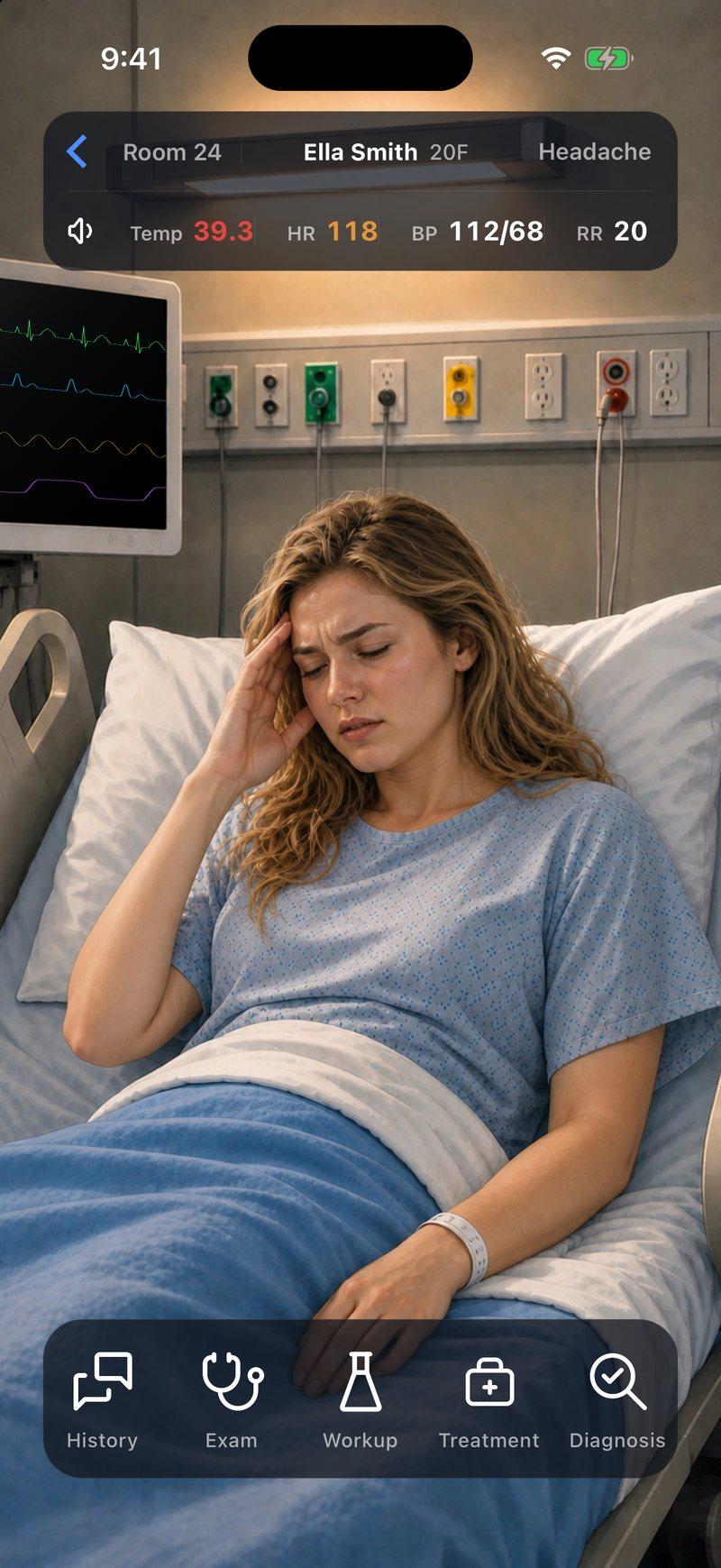
Headache in a 20-year-old woman
“My head has never hurt this bad. Can you turn the light down?”
“Fever and severe headache since last night, much worse this morning. Her roommate says she's been a little confused today.”
Your challenge
Ella thought it was the flu. Her roommate made her come in, and her roommate is the one who noticed she has been a little confused today. Fever and the worst headache of her life can come from a brain infection, a virus, a clot in the brain's veins, a bad migraine or toxic shock. Here the danger is not missing the answer. It is doing the right things in the wrong order, because some steps can wait and one cannot.
After the case, Attending’s Notes explains the decisions that mattered, backed by 10 sources.
Ready to make the call?


Two cases are free. This one is part of Premium.
Spoiler: the diagnosis and what this case teaches
Diagnosis
Acute Bacterial Meningitis
Lesson 1
Suspect Meningitis Without Every Classic Sign
A roommate may notice confusion before a brief examination detects it.
- Fever, headache, and confusion suggest meningitis
- A stiff neck fits meningitis but is not required
- Subtle mental slowing can mean altered mental status
- Vaccination and no rash do not exclude meningitis
Lesson 2
Get Spinal Fluid Promptly When Safe
Brain imaging comes first only when findings indicate a need.
- Spinal fluid testing helps identify the cause
- Image first if a mass or brain shift is suspected
- Normal CT cannot ensure safe lumbar puncture
- Defer lumbar puncture for bleeding risk or instability
Lesson 3
Antibiotics Cannot Wait
Obtain blood cultures promptly if doing so will not delay treatment.
- Delayed lumbar puncture must not delay antibiotics
- Start ceftriaxone 2 g IV every 12 hours plus vancomycin
- Add ampicillin for patients at risk of Listeria
- Give dexamethasone before or with the first antibiotic
- Add acyclovir if encephalitis is suspected
Lesson 4
Spinal Fluid Still Helps After Antibiotics Start
The results can confirm the organism and guide antibiotic narrowing.
- Neutrophils and low CSF glucose suggest bacteria
- Obtain spinal fluid when safe even after antibiotics
- Use droplet precautions for suspected meningococcus
- Admit and escalate as monitoring needs rise
In the app, every line above opens into the detail behind it: doses, pitfalls and the evidence, with 10 sources linked to the originals.
Ella is a fictional patient. Code Status is for training only and is not intended for real-world patient care, diagnosis, treatment, or clinical decision-making.